


Most fragrance enthusiasts assume a perfume smells the same from first spray to final dry down, but this misconception leads to disappointing purchases. Understanding scent profile terminology reveals how perfumes evolve through distinct layers, helping you predict fragrance performance and select cruelty-free, designer-inspired options that align with your values. This guide breaks down essential perfume note concepts, modern innovations in scent composition, and practical strategies for choosing affordable, ethically produced fragrances that deliver luxury-quality experiences without the boutique markup.
Table of Contents
- Understanding Perfume Notes And The Olfactive Pyramid
- How Modern Perfumery Evolves Scent Profiles Beyond Traditional Layers
- Natural And Cruelty-Free Perfume Ingredients And Their Impact On Scent Profiles
- Using Scent Profile Terminology To Select Your Ideal Cruelty-Free, Designer-Inspired Perfume
- Explore Cruelty-Free Designer-Inspired Perfumes At PARFUM.NYC
Key takeaways
| Point | Details |
|---|---|
| Perfume notes structure | Fragrances layer top, heart, and base notes with different evaporation rates creating evolving scent experiences. |
| Modern scent innovations | Blended and linear compositions move beyond traditional pyramids for smoother, more consistent fragrance profiles. |
| Natural ingredient impact | Cruelty-free perfumes offer complex, ethical scent profiles that prioritize skin safety and environmental responsibility. |
| Terminology application | Knowing scent profile language helps predict fragrance evolution and select designer-inspired options matching personal preferences. |
Understanding perfume notes and the olfactive pyramid
The foundation of scent profile terminology rests on three distinct note categories that define how fragrances unfold over time. Perfume notes are categorized into three layers: top, heart, and base notes, each with distinct evaporation rates and scent characteristics. This structure determines what you smell immediately after spraying versus hours later.
Top notes create the initial impression, typically lasting 5 to 15 minutes. These volatile ingredients evaporate quickly, featuring bright, fresh elements like citrus, herbs, or light florals. Heart notes emerge as top notes fade, forming the perfume’s core character for 2 to 4 hours. These middle layer scents include richer florals, spices, and fruits that define the fragrance identity. Base notes provide depth and longevity, lasting 4 to 6 hours or longer. Heavy molecules like woods, musks, and resins anchor the composition, creating lasting impressions.
The Olfactive Pyramid structures fragrance notes into top, heart, and base layers representing the perfume’s life cycle. This visual concept emerged in 19th-century perfumery, formalizing how perfumers compose balanced scents. The pyramid illustrates temporal progression, with lighter notes at the top evaporating first and heavier base notes persisting longest.
Pro Tip: When testing perfumes, observe how the scent shifts over 30 minutes to detect each note layer and predict long-term wearability.
Understanding types of perfume notes explained empowers you to interpret fragrance descriptions accurately. A perfume listing “bergamot, jasmine, sandalwood” signals a classic pyramid structure: citrus opening, floral heart, woody base. This knowledge helps you anticipate scent evolution before purchasing.
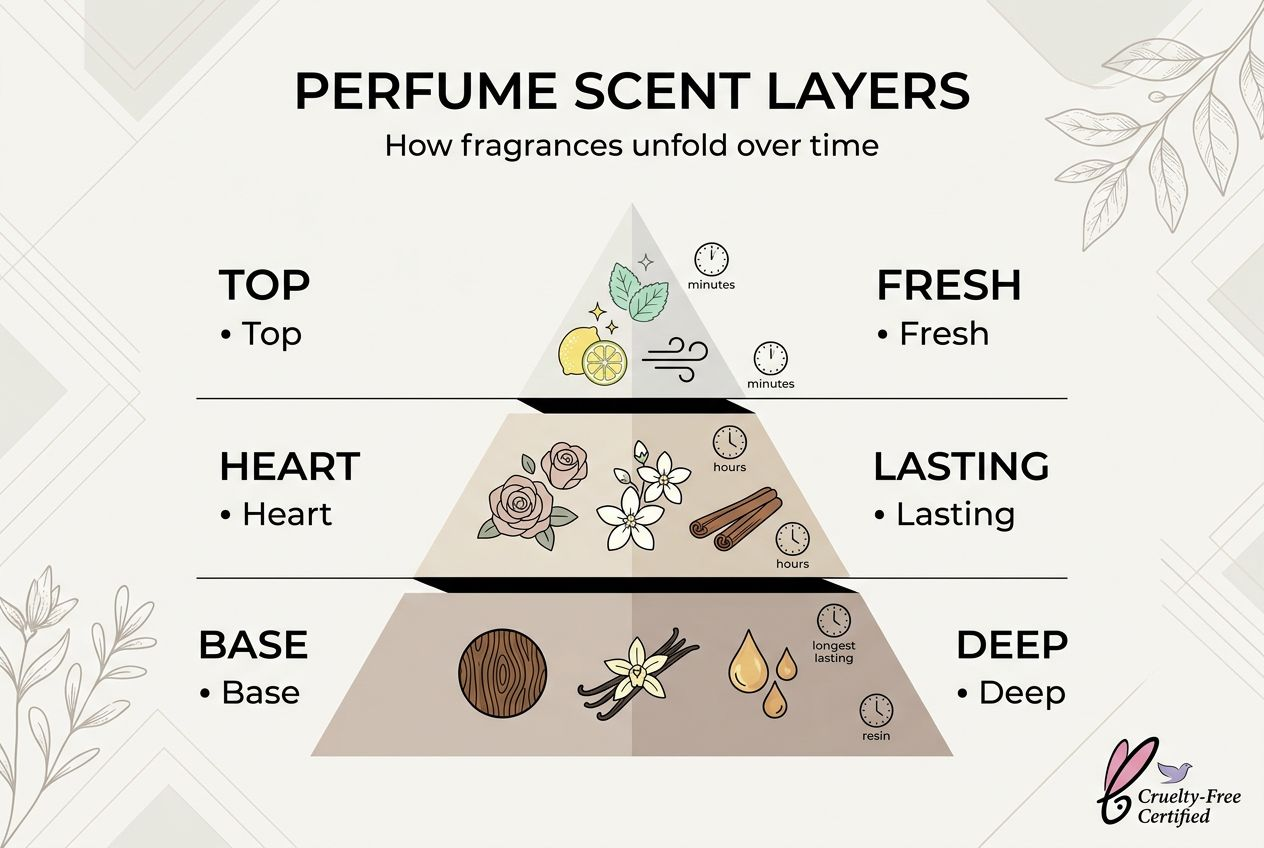
The table below breaks down common note categories by layer:
| Layer | Typical Duration | Common Ingredients | Scent Characteristics |
|---|---|---|---|
| Top Notes | 5-15 minutes | Citrus, herbs, light fruits | Bright, fresh, immediately noticeable |
| Heart Notes | 2-4 hours | Florals, spices, green notes | Rich, defining, core character |
| Base Notes | 4-6+ hours | Woods, musks, resins, vanilla | Deep, lasting, anchoring |
Grasping what is scent profile terminology means recognizing these layers work together to create a complete olfactory experience. Rather than static compositions, quality perfumes tell stories through evolving note progressions.
How modern perfumery evolves scent profiles beyond traditional layers
While the classic pyramid remains useful, contemporary perfume design challenges rigid layer separation. The fragrance pyramid has evolved with modern perfumes experimenting with blended transitions and linear scents for smoother, consistent profiles. This shift reflects changing consumer preferences and creative innovation in fragrance architecture.
Blended scent profiles feature seamless transitions between note layers, eliminating sharp distinctions between top, heart, and base. Instead of discrete phases, these compositions create fluid progressions where notes melt into one another. You experience gradual evolution rather than abrupt shifts, resulting in sophisticated, nuanced fragrances that feel cohesive throughout wear time.
Linear scent profiles maintain consistent character from initial spray to final dry down. These fragrances smell essentially the same after 5 minutes as they do after 5 hours, though intensity may decrease. Linear compositions appeal to consumers who prefer predictable, steady scents without dramatic transformations. This approach simplifies scent profile descriptions, focusing on overall character rather than temporal progression.
Modern perfumery is moving beyond the traditional Olfactive Pyramid to more nuanced and spherical fragrance representations. Some perfumers now visualize scents as interconnected webs rather than hierarchical pyramids, reflecting complex ingredient interactions and simultaneous note presence.
The comparison below highlights key differences:
| Aspect | Traditional Pyramid | Blended Profile | Linear Profile |
|---|---|---|---|
| Note Separation | Distinct top, heart, base layers | Smooth transitions between layers | Minimal layer distinction |
| Scent Evolution | Clear phases over time | Gradual, fluid progression | Consistent throughout wear |
| Complexity | Structured, predictable | Nuanced, sophisticated | Straightforward, reliable |
| Best For | Classic fragrance lovers | Those seeking refined evolution | Preference for consistency |
Pro Tip: When choosing perfumes, consider whether you prefer dynamic evolving scents or consistent linear ones to match your lifestyle and wearing occasions.
Understanding these modern approaches helps you interpret contemporary fragrance marketing. When brands describe “seamless composition” or “consistent wear,” they signal departures from traditional pyramid structures. Learning how to apply extrait de parfum becomes especially important with blended profiles, as application technique influences how smoothly notes transition.
The role of fragrance families intersects with these structural innovations. A woody fragrance might use traditional layering or opt for linear presentation, depending on creative vision. Recognizing both family classification and compositional structure provides complete scent profile understanding.
Natural and cruelty-free perfume ingredients and their impact on scent profiles
Ingredient choices fundamentally shape scent profiles, with natural and cruelty-free formulations offering distinct characteristics compared to conventional synthetic perfumes. Natural perfumes use ingredients with a soul and complexity offering unique sensory experiences. These botanical extracts create more nuanced, dynamic scent profiles that evolve organically on skin.

Natural ingredients typically produce lighter, more ephemeral fragrances than synthetic counterparts. Essential oils and plant extracts have inherent volatility, resulting in shorter wear times but richer olfactory complexity. You might notice subtle variations each time you wear a natural perfume, as botanical ingredients respond to skin chemistry and environmental factors. This variability adds character and authenticity that synthetic formulas cannot replicate.
Many conventional perfumes contain synthetic chemicals that may irritate skin or disrupt hormones. Phthalates, synthetic musks, and petroleum-derived ingredients extend longevity and reduce costs but raise health concerns for sensitive individuals. Cruelty-free and natural perfumes avoid these problematic components, prioritizing ingredient transparency and ethical sourcing.
The benefits of choosing natural, cruelty-free perfumes include:
- Ethical sourcing practices that respect animal welfare and environmental sustainability
- Reduced risk of skin irritation and allergic reactions from harsh synthetic chemicals
- Unique, complex scent experiences with botanical depth and character
- Lower environmental impact through biodegradable ingredients and responsible production
- Ingredient transparency allowing informed choices aligned with personal values
Understanding choosing clean cruelty-free perfume requires recognizing how ingredient declarations work. The term “fragrance” on labels often masks proprietary blends that may include synthetic components. Reputable brands committed to clean formulations provide detailed ingredient lists, allowing you to verify ethical and natural claims.
Pro Tip: Layer natural perfumes with complementary body products to enhance longevity due to lighter base notes, creating lasting scent experiences without synthetic fixatives.
The shift toward luxury-inspired scent qualities in cruelty-free perfumery demonstrates that ethical choices need not compromise olfactory sophistication. Modern natural perfumers achieve impressive complexity and longevity through innovative extraction methods and thoughtful blending, delivering designer-quality experiences with clean ingredients.
When evaluating scent profiles, consider how natural ingredients influence note progression. Botanical top notes may fade faster than synthetic alternatives, but heart and base notes often reveal greater depth. This characteristic creates fragrances that reward patience, unfolding gradually to reveal hidden facets throughout the day.
Using scent profile terminology to select your ideal cruelty-free, designer-inspired perfume
Applying scent profile knowledge transforms fragrance shopping from guesswork into informed decision-making. Understanding perfume notes helps in predicting fragrance evolution and selecting scents matching personal preferences. This practical framework guides you toward affordable, cruelty-free options inspired by luxury designers.
Follow these steps to interpret scent profiles effectively:
- Read the complete note breakdown, identifying top, heart, and base components to visualize fragrance progression.
- Match note categories to your lifestyle needs: fresh top notes for daytime energy, rich base notes for evening sophistication.
- Research fragrance family classifications to understand overall character before examining specific notes.
- Test fragrances on skin rather than paper strips, as body chemistry significantly influences scent development.
- Wait at least 30 minutes during testing to experience heart and base notes, not just initial top note impressions.
- Compare scent profiles across multiple options, noting similarities and differences in note selection and structure.
When seeking quality designer-inspired perfumes, look for these ingredient must-haves:
- Detailed note breakdowns listing specific ingredients rather than vague “floral” or “woody” descriptions
- Cruelty-free and vegan certifications from recognized organizations
- Transparent ingredient lists avoiding generic “fragrance” or “parfum” terms
- High concentration formats like extrait de parfum for better longevity and value
- Clear information about natural versus synthetic component ratios
Red flags signaling lower quality or questionable ethics include:
- Ingredient lists dominated by “fragrance” without further specification
- Absence of cruelty-free certifications or vague ethical claims
- Extremely low prices suggesting diluted formulations or synthetic shortcuts
- Marketing focused on packaging rather than scent composition and ingredient quality
Exploring fragrance families guide cruelty-free options helps narrow choices based on preferred scent categories. If you gravitate toward fresh, citrus-forward fragrances, focus on profiles with prominent top notes. For warm, sensual preferences, prioritize compositions with rich base notes like amber, vanilla, or sandalwood.
Pro Tip: Use available fragrance quizzes and detailed scent profile descriptions to personalize choices, matching note preferences to your unique tastes and ethical standards.
Taking a fragrance quiz personalized matching assessment streamlines selection by identifying scent families and note combinations aligned with your preferences. These tools apply scent profile terminology to recommend specific fragrances, saving time and reducing purchase regret.
Understanding designer-inspired ethical perfumes means recognizing that affordable options can deliver luxury-quality scent profiles without boutique pricing. Many designer-inspired fragrances replicate note structures and olfactory impressions of high-end perfumes using cruelty-free ingredients and transparent formulations. By comparing scent profiles rather than brand names, you discover exceptional value in ethically produced alternatives.
Layering techniques extend scent profile benefits, combining complementary fragrances or matching perfumes with scented body products. Apply heavier base note perfumes to pulse points for longevity, while lighter top note scents work well for refreshing throughout the day. This strategic approach maximizes your fragrance wardrobe’s versatility.
Explore cruelty-free designer-inspired perfumes at PARFUM.NYC
Now that you understand scent profile terminology and how to apply it, discovering your perfect cruelty-free fragrance becomes an exciting journey rather than overwhelming guesswork. PARFUM.NYC offers a carefully curated collection of designer-inspired perfumes that combine luxury-quality scent profiles with ethical formulations and accessible pricing.

Our bestselling cruelty-free perfumes feature detailed scent profile breakdowns, helping you predict fragrance evolution and select options matching your preferences. Each perfume in our cruelty-free fragrance collection emphasizes clean ingredients, transparent sourcing, and sophisticated note compositions inspired by iconic luxury scents. You get designer-quality olfactory experiences without compromising your values or budget, backed by free shipping and 30-day satisfaction returns.
FAQ
What is scent profile terminology in perfumery?
Scent profile terminology describes how perfumes are structured with layers of notes including top, heart, and base components that explain fragrance evolution over time. This language helps consumers understand what they will smell immediately after application versus hours later. Knowing these terms allows you to interpret fragrance descriptions accurately and predict scent performance before purchasing.
How do natural perfumes differ in scent profiles from synthetic ones?
Natural perfumes tend to be lighter and more complex, often requiring more frequent application due to faster evaporation of botanical ingredients. Synthetic perfumes typically feature stronger base notes and longer-lasting scents but may include skin irritants or hormone disruptors. Natural formulations offer unique olfactory depth that responds dynamically to individual skin chemistry, creating personalized scent experiences.
Can understanding scent profiles help me find affordable, cruelty-free designer-inspired perfumes?
Yes, knowing scent profiles lets you predict how perfumes smell and evolve, helping you select designer-inspired cruelty-free options within budget by comparing note structures rather than brand names. This knowledge improves satisfaction with fragrance purchases by ensuring scent characteristics match your preferences and lifestyle needs. You can identify quality formulations that deliver luxury experiences without boutique pricing.
What does fragrance mean on perfume ingredient lists?
Fragrance is a generic term that may include synthetic or natural components without specific disclosure due to proprietary formulation protections. The term fragrance on an ingredient list does not always indicate harm, but consumers should pay attention to brand standards and transparency commitments. Researching brands to ensure ingredient clarity helps you make informed choices aligned with your health and ethical values.


