


Think perfume smells the same all day? That assumption keeps you from unlocking your ideal fragrance. A perfume’s scent profile evolves dramatically over hours, revealing layers that first spray never hints at. Understanding how scent profiles work transforms confusing fragrance shopping into confident, personalized choices, especially when seeking affordable, cruelty-free luxury perfumes that match your unique taste and ethical values.
Table of Contents
- Understanding Scent Profiles: Structure And Components
- Fragrance Families And Their Role In Scent Profiles
- Impact Of Cruelty-Free Ingredients On Scent Profiles
- Common Misconceptions About Scent Profiles
- Using Scent Profiles For Personalization And Shopping
- Explore Affordable Luxury-Inspired And Cruelty-Free Fragrances
- Frequently Asked Questions About Scent Profiles
Key Takeaways
| Point | Details |
|---|---|
| Scent profiles have three evolving layers | Top notes fade in 15 minutes, middle notes last hours, and base notes linger longest |
| Five fragrance families organize 85%+ of perfumes | Floral, woody, oriental/spicy, fresh, and gourmand families simplify selection |
| Cruelty-free formulations maintain full complexity | Synthetic and plant-based ingredients replicate traditional scents with 95%+ fidelity |
| Common myths hurt fragrance decisions | Scent isn’t static, perfumes blend families, and price doesn’t guarantee quality |
| Personalization tools boost satisfaction 40% | Scent finder quizzes and profile knowledge improve purchase confidence |
Understanding Scent Profiles: Structure and Components
Grasping how a scent profile unfolds clarifies why perfumes smell different 10 minutes versus 10 hours after application. A scent profile consists mainly of three layers: top notes, middle (heart) notes, and base notes, which together create the full fragrance experience. Each layer serves a distinct purpose and timeline in your perfume’s evolution.
Most quality perfumes contain 9 to 15 individual notes distributed across these three layers. Top notes typically feature 3 to 5 lighter ingredients like citrus or herbs. Middle notes add another 3 to 5 elements such as florals or spices. Base notes round out the profile with 3 to 5 deeper materials like woods or musks. This structured approach to types of perfume notes ensures balanced complexity that keeps you interested for hours.
| Note Layer | Role | Duration | Scent Evolution Impact |
|---|---|---|---|
| Top Notes | First impression, lightest volatility | 5-15 minutes | Creates initial attraction, fades quickly |
| Middle Notes | Core character, moderate volatility | 2-6 hours | Defines fragrance personality, emerges after top fades |
| Base Notes | Foundation, lowest volatility | 6-24+ hours | Provides lasting impression, anchors entire profile |
The evolution happens because perfume ingredients evaporate at different rates based on their molecular weight. Light top notes vanish first, revealing heavier middle notes beneath. Eventually, only rich base notes remain on your skin. This layered disappearance creates the journey that makes fragrances dynamic rather than flat.
Key aspects of scent evolution include:
- Top notes provide immediate appeal but disappear within the first quarter hour
- Middle notes emerge as top notes fade, forming the heart of the fragrance experience
- Base notes develop fully after several hours, creating the signature dry down
- Temperature and skin chemistry affect how quickly each layer transitions
- Proper application on pulse points enhances natural scent progression
Pro Tip: Sample perfumes for at least 4 hours before deciding. The base notes that linger longest reveal whether you’ll love wearing the fragrance daily, not just the flashy top notes at the counter.
Understanding this three-layer architecture transforms how you evaluate perfumes. Instead of judging a fragrance in 30 seconds, you appreciate its full narrative arc. This knowledge becomes especially valuable when exploring affordable luxury options where scent profile basics help you identify quality formulations regardless of price.
Fragrance Families and Their Role in Scent Profiles
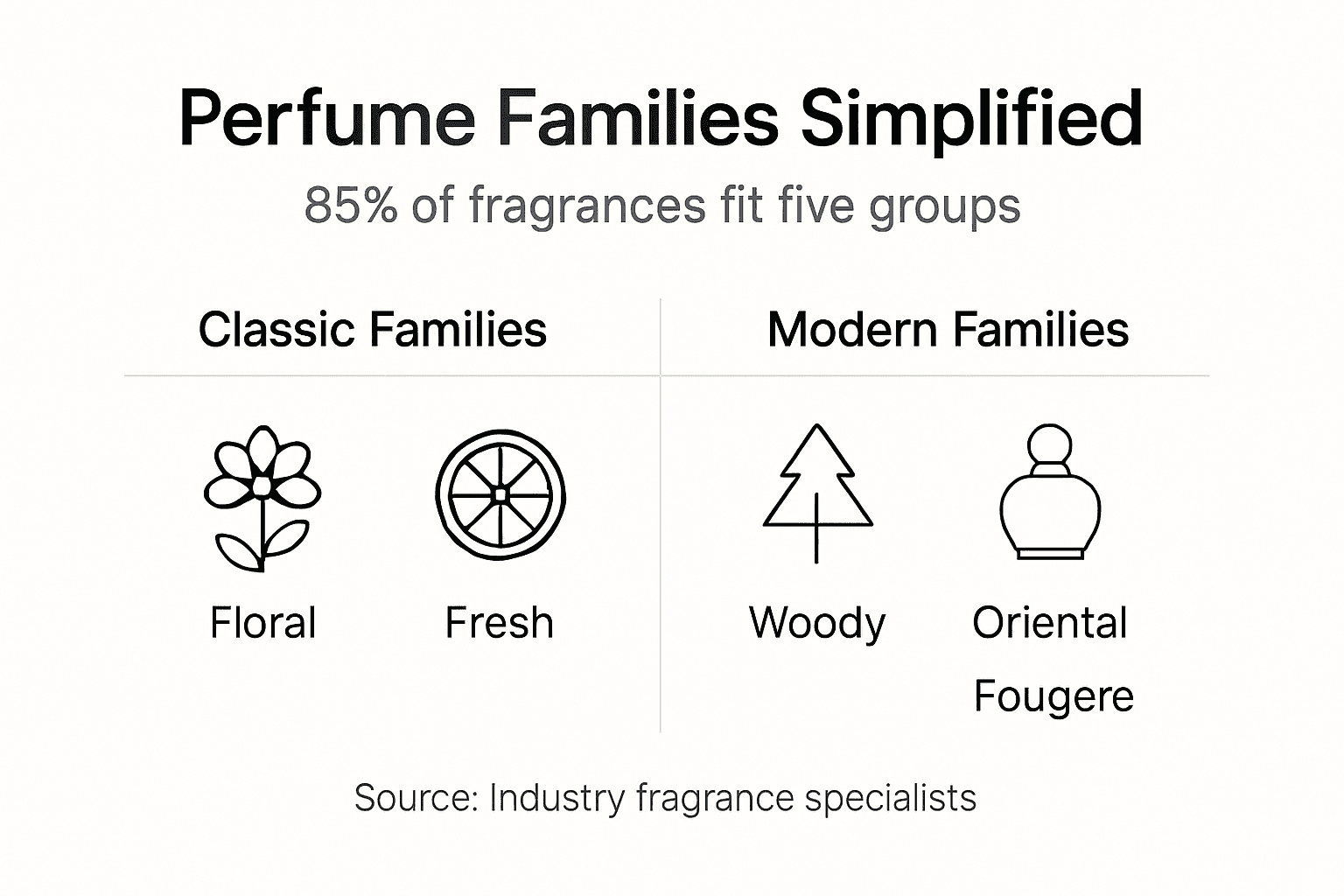
Fragrance families organize the individual notes within scent profiles into recognizable categories that simplify your search. These broader classifications act like genres in music, helping you quickly identify which perfumes align with your preferences before diving into specific note details. The primary fragrance families classified in scent profiles are floral, woody, oriental (spicy), fresh, and gourmand, covering over 85% of market perfumes.
Each family has distinct characteristics that guide expectations. Floral fragrances center on flower notes like rose, jasmine, or lily, creating romantic or elegant profiles. Woody scents feature sandalwood, cedar, or vetiver for grounded, earthy character. Oriental or spicy families blend warm notes like vanilla, cinnamon, and amber for sensual depth. Fresh perfumes use citrus, aquatic, or green notes for clean, energizing profiles. Gourmand fragrances incorporate edible notes like chocolate, caramel, or coffee for sweet, comforting scents.

These five families make browsing manageable. Instead of evaluating thousands of random perfumes, you narrow choices by identifying which families resonate with your style. This categorization proves especially helpful when exploring fragrance families online, where you can’t physically smell products before purchasing.
| Fragrance Family | Dominant Characteristics | Typical Occasions | Example Notes |
|---|---|---|---|
| Floral | Romantic, feminine, elegant | Daytime, spring/summer, formal events | Rose, jasmine, peony, lily |
| Woody | Grounded, warm, sophisticated | Evening, fall/winter, professional | Sandalwood, cedar, vetiver, patchouli |
| Oriental/Spicy | Sensual, bold, exotic | Night out, cool weather, special occasions | Vanilla, amber, cinnamon, incense |
| Fresh | Clean, energizing, light | Daily wear, summer, active lifestyle | Citrus, bergamot, aquatic, green notes |
| Gourmand | Sweet, comforting, playful | Casual, cold weather, cozy settings | Vanilla, chocolate, caramel, tonka bean |
Key insights about fragrance families for smarter shopping:
- Knowing your preferred family eliminates 70% of unsuitable options immediately
- Families can overlap, with many modern perfumes blending two or three categories
- Seasonal preferences often align with families: fresh for summer, oriental for winter
- Gender marketing within families is outdated; any family works for any wearer
- Niche and designer perfumes use the same family structure despite price differences
The fougere fragrance family represents a specialized subcategory blending fresh, woody, and aromatic elements, demonstrating how families can intersect. This classification system, developed over a century ago, remains relevant because human scent perception hasn’t changed. We still gravitate toward familiar categories even as individual perfumes innovate within those boundaries.
Understanding fragrance families overview accelerates your learning curve from fragrance novice to confident buyer. You develop a mental framework for describing what you like and discovering new perfumes that fit your established preferences. This organized approach particularly benefits those exploring cruelty-free options, where ingredient transparency matters as much as scent family alignment.
Impact of Cruelty-Free Ingredients on Scent Profiles
Ingredient choices directly shape how scent profiles develop, last, and align with your values. Traditional perfumery historically relied on animal-derived materials like musk from deer, ambergris from whales, or civet from wild cats. Modern cruelty-free formulations completely eliminate these sources, replacing them with synthetic or plant-based alternatives that maintain scent integrity.
Cruelty-free perfumes use synthetic or plant-based ingredients maintaining over 95% fidelity to traditional animal-derived scents. Advanced chemistry allows perfumers to recreate musky, animalic, or ambery notes without harming any creatures. These synthetic molecules often provide better consistency and longevity than natural animal extracts, which varied wildly based on source and processing.
The impact on scent complexity proves minimal to nonexistent in well-formulated cruelty-free perfumes. Plant absolutes, essential oils, and synthetic aroma chemicals offer perfumers thousands of building blocks for creating rich, layered profiles. A cruelty-free woody oriental can deliver the same depth as a traditional formulation, with base notes lasting just as long. The key difference lies in sourcing ethics, not sensory experience.
Advantages of cruelty-free formulations in scent profiles include:
- Consistent note quality batch to batch due to controlled synthetic production
- Enhanced longevity from stable modern fixatives versus degrading animal materials
- Broader creative palette as chemists develop new aroma molecules unavailable in nature
- Transparency in ingredient sourcing for health-conscious and ethical consumers
- Lower environmental impact from sustainable plant cultivation versus animal farming
- Reduced allergen risk as synthetic notes avoid proteins found in some natural animal extracts
Pro Tip: Check ingredient transparency when shopping. Quality brands openly list cruelty-free certifications and specify plant-based or synthetic sources, showing confidence in their ethical formulations while maintaining luxury scent profiles.
The misconception that vegan or cruelty-free perfumes smell inferior stems from outdated assumptions. Early synthetic fragrances in the mid-20th century sometimes had harsh, chemical notes because aroma chemistry was still developing. Today’s technology produces synthetic musks, ambers, and woods virtually indistinguishable from traditional sources. When you choose cruelty-free perfume, you’re accessing modern perfumery’s full capabilities without ethical compromise.
Affordable luxury brands increasingly embrace cruelty-free formulations as standard practice. This shift reflects both consumer demand and recognition that synthetic ingredients often outperform natural animal materials in stability and cost effectiveness. Your scent profile preferences remain fully achievable within ethical boundaries, proving compassion and sophistication aren’t mutually exclusive.
Common Misconceptions About Scent Profiles
Misunderstanding how scent profiles work leads to disappointing purchases and missed opportunities. Clearing up these common errors improves your fragrance literacy and shopping success. Let’s address three major misconceptions that confuse even experienced perfume enthusiasts.
-
Scent profiles remain static throughout wear. Many people judge a perfume based solely on the initial spray, assuming that first impression represents the entire experience. Scent profiles evolve as different fragrance notes evaporate over several hours, contrary to belief they are static. A citrus-heavy opening might transform into a warm, spicy heart before settling into a woody base. Evaluating perfumes within 10 minutes guarantees you’ll miss 80% of their character. This evolution is intentional design, not a flaw.
-
Every perfume fits neatly into one fragrance family. The five-family system provides helpful organization, but modern perfumery thrives on creative blending. Many perfumes blend multiple families creating hybrid profiles versus fitting only one family. A floral gourmand combines rose with vanilla. A fresh woody pairs citrus with cedar. These crossovers offer complexity and uniqueness that pure single-family fragrances can’t match. Expecting rigid categorization limits your exploration of innovative scent profiles.
-
Higher prices automatically mean more complex or superior scent profiles. Affordable luxury perfumes can provide signature notes with simplified scent profiles, without high price meaning superior complexity. Expensive perfumes often reflect marketing costs, packaging, and brand prestige rather than dramatically better ingredients. A $200 niche fragrance might contain the same synthetic musks and plant extracts as a $60 designer-inspired option. Note quality and composition matter far more than retail price when evaluating scent profile sophistication.
Perfume evolution teaches patience. The scent you smell in the first 15 minutes represents less than a quarter of the fragrance’s full story, with middle and base notes revealing the perfumer’s true artistry over the following hours.
These misconceptions create unnecessary barriers to finding your perfect fragrance. Understanding that scent profiles evolve, blend families, and exist across all price points opens your options significantly. You stop dismissing perfumes prematurely, appreciate hybrid creativity, and evaluate formulations on merit rather than marketing.
The correction process starts with mindful sampling. Spray a perfume on skin (not paper) and track how it changes hourly. Note which families you detect at each stage. Compare affordable options against luxury brands in blind tests. This empirical approach rapidly replaces assumptions with actual sensory data, making you a more discerning and satisfied fragrance consumer.
Debunking these myths particularly benefits those seeking cruelty-free, affordable luxury options. You realize that perfume scent evolution, fragrance families, and affordable luxury perfume design all work together regardless of boutique pricing. Quality scent profiles exist everywhere once you know how to identify them.
Using Scent Profiles for Personalization and Shopping
Applying your scent profile knowledge transforms abstract concepts into practical shopping strategies. Instead of randomly testing dozens of perfumes, you make targeted choices based on lifestyle needs, personal style, and situational requirements. This focused approach saves time and dramatically increases purchase satisfaction.
Scent profiles guide customers to choose perfumes that align with situational needs such as seasonal wear, time of day, or formal versus casual settings. A fresh citrus profile suits summer mornings and active lifestyles. A woody oriental works better for winter evenings and sophisticated occasions. Understanding these alignments helps you build a fragrance wardrobe rather than searching endlessly for one perfect scent.
Personalization tools amplify this strategic approach. Using a scent finder quiz to match individual scent profiles increases customer satisfaction by over 40%. These quizzes ask about your preferences across fragrance families, note favorites, typical wearing occasions, and style personality. The algorithm then suggests perfumes matching your profile, dramatically narrowing options from hundreds to a curated few worth exploring.
Situational scent family recommendations for smarter fragrance rotation:
- Fresh and citrus families for daytime professional settings requiring subtle, clean scents
- Floral profiles for spring and summer when lighter, romantic fragrances complement warmer weather
- Woody and oriental families for evening wear and fall or winter when richer scents feel appropriate
- Gourmand options for casual, cozy settings where sweet, comforting notes enhance relaxed atmospheres
- Hybrid fresh-woody combinations for versatile daily wear bridging multiple contexts
- Spicy orientals for special occasions demanding bold, memorable fragrance statements
Note interplay within scent profiles offers another personalization angle. You might love jasmine but dislike rose, preferring floral perfumes with jasmine in the middle notes. Or you enjoy woody bases but want fresh top notes rather than spicy openings. This granular preference mapping helps you request specific note combinations when fragrance quiz benefits match you with options.
Exploring designer-inspired perfume options demonstrates how affordable alternatives can deliver signature scent profiles without boutique markups. These fragrances reverse-engineer beloved luxury formulations, maintaining the essential note structure and family classification at accessible prices. Your scent profile preferences remain achievable regardless of budget constraints.
Pro Tip: Sample perfumes for a full day before buying. Apply in the morning and observe how the scent evolves through top, middle, and base notes across different activities and temperatures to confirm you love the complete profile, not just the opening.
Seasonal rotation leverages scent profile understanding for year-round satisfaction. Lighter fresh and floral families prevent overwhelming others in summer heat. Richer woody and oriental profiles provide needed warmth and presence in cold months. This strategic matching between fragrance weight and environmental conditions ensures your perfume always feels appropriate and comfortable.
The connection between luxury-inspired fragrance elements and scent profiles reveals how affordable options achieve sophisticated results. Quality synthetic ingredients, thoughtful note selection, and balanced family representation matter more than brand prestige. You can build an entire fragrance wardrobe covering multiple profiles and occasions within a reasonable budget once you understand what to look for.
Personalization ultimately means moving from passive perfume shopping to active curation. You define your scent profile preferences across families, notes, and situations. You use tools like quizzes to discover matches efficiently. You sample strategically, evaluating full evolution before committing. This informed approach, supported by understanding personalization in fragrance shopping and scent profiles for buyers, turns fragrance selection from overwhelming guesswork into confident, satisfying decisions.
Explore Affordable Luxury-Inspired and Cruelty-Free Fragrances
Your journey through scent profiles reveals what makes perfumes work and how to choose them confidently. Now explore how these principles come to life in accessible, ethical formulations. Parfum.NYC offers a curated collection where affordable luxury meets cruelty-free values without compromising scent complexity.

Every fragrance in our fragrance collection demonstrates the three-layer note structure and fragrance family classifications you’ve learned. These designer-inspired perfumes deliver sophisticated scent profiles using premium synthetic and plant-based ingredients that match traditional luxury quality. You get the full evolution from top notes through lingering base without animal-derived materials.
The personalized fragrance quiz applies your scent profile knowledge practically, matching your preferences across families, notes, and occasions to specific products. Free shipping and 30-day returns let you sample confidently, giving each perfume the hours needed to reveal its complete character. Explore now and find fragrances that align with both your scent preferences and ethical values.
Frequently Asked Questions About Scent Profiles
What exactly is a top note and how long does it last?
Top notes are the lightest, most volatile ingredients you smell immediately after applying perfume. They typically feature citrus, herbs, or light florals that evaporate within 5 to 15 minutes. These opening notes create first impressions but don’t represent the full fragrance, which is why testing perfumes over several hours matters more than initial reactions.
Can a perfume belong to more than one fragrance family?
Yes, modern perfumes frequently blend multiple fragrance families to create unique hybrid profiles. A floral-woody perfume combines rose or jasmine middle notes with sandalwood or cedar base notes. These crossover compositions offer more complexity and individuality than single-family fragrances, representing creative innovation in contemporary perfumery.
Do cruelty-free perfumes smell different from traditional ones?
Cruelty-free perfumes using synthetic or plant-based ingredients maintain over 95% fidelity to traditional animal-derived scents. Modern aroma chemistry replicates musk, amber, and animalic notes without harming creatures, often with better consistency and longevity. Quality cruelty-free formulations are indistinguishable from traditional perfumes in blind scent tests.
How can I use my scent profile to find a new perfume?
Identify which fragrance families you prefer, then note specific ingredients you love within those families. Use scent finder quizzes that match your profile to products, filtering by preferred notes, occasions, and seasonal wear. Sample recommended perfumes on skin for several hours to evaluate how their full scent profile evolves before purchasing.
Why do perfume scents change after first application?
Perfumes are designed with three layers of notes that evaporate at different rates. Top notes disappear first, revealing middle notes that form the heart of the fragrance. Base notes emerge last and linger longest, creating the dry-down character. This intentional evolution ensures fragrances remain interesting throughout wear rather than smelling flat and unchanging.


