


Finding a cruelty-free perfume that actually lasts past your morning commute in New York City can feel impossible. For eco-conscious millennials and young professionals, long-lasting scent is more than just a nice-to-have—it is about making every spritz count without breaking the bank or sacrificing values. With so many options promising all-day wear, understanding the truth behind a sustained olfactory experience helps you spot the difference between marketing myths and scientific formulation, guiding you toward affordable, ethical fragrances that truly endure.
Table of Contents
- Defining Long-Lasting Perfume And Common Misconceptions
- Types Of Perfume Concentrations And Their Longevity
- Key Ingredients And Formulation For Extended Wear
- Vegan And Cruelty-Free Perfume Options Today
- Choosing, Applying, And Avoiding Common Mistakes
Key Takeaways
| Point | Details |
|---|---|
| Fragrance Concentration Matters | Higher concentrations of fragrance oils generally yield longer-lasting scents, but quality formulation and fixatives are crucial for longevity. |
| Common Misconceptions | Price does not determine a perfume’s longevity; effective formulation and proper application techniques are more impactful. |
| Storage Conditions | Proper storage away from heat and light is essential to maintain fragrance integrity and extend its lifespan. |
| Choosing Wisely | Test fragrances on hydrated skin and consider your lifestyle when selecting a perfume concentration to match your needs. |
Defining Long-Lasting Perfume and Common Misconceptions
Long-lasting perfume isn’t about what you smell in the first five minutes. It’s about what lingers on your skin eight, ten, or even twelve hours later—that subtle scent trail people catch as you walk past them on the subway.
At its core, long-lasting perfume delivers a sustained olfactory experience that doesn’t fade quickly. The difference between a fragrance that disappears after two hours and one that lasts all day comes down to chemistry, not marketing hype.
What Makes Perfume Actually Last?
Longevity depends on three main factors:
- Fragrance concentration: Higher concentrations of aromatic compounds mean stronger, longer-lasting scents
- Fixatives: These special ingredients slow down evaporation and anchor the fragrance to your skin
- Formulation quality: How ingredients are blended and processed directly impacts how long they perform
Research on fragrance chemistry and longevity confirms that fixatives—natural or synthetic—are the secret weapon. They work like an invisible glue, preventing the top notes from vanishing within minutes and allowing mid and base notes to develop properly.
The Concentration Myth
Here’s where most people get confused: “Perfume” doesn’t automatically mean it lasts longer than “eau de toilette.” Both terms refer to fragrance concentration, but concentration alone doesn’t guarantee staying power.
You might think more fragrance oil equals more longevity. Wrong. A poorly formulated high-concentration fragrance can fade faster than a well-engineered lower-concentration one.
Extrait de parfum (also called perfume extract) contains 20-40% fragrance concentration and typically lasts longest. But affordable designer-inspired options often use eau de parfum concentration (15-20%) with quality fixatives that perform nearly as well.
Common Misconceptions Killing Your Fragrance Game
These false beliefs waste your money and leave you reapplying constantly:
-
“Expensive = Long-lasting”: Price doesn’t determine longevity. Formulation does. A $50 perfume with proper fixatives outlasts a $200 fragrance with weak composition.
-
“Spraying more helps”: Oversaturating your skin actually makes fragrance fade faster. Skin can only hold so much oil; excess evaporates immediately.
-
“It’s supposed to smell the same all day”: Real fragrance evolves. Top notes fade (intentionally) to reveal richer base notes. This isn’t failure—it’s design.
-
“Synthetic fixatives are bad”: Many eco-conscious shoppers assume synthetic = harmful. Modern synthetic fixatives are often cleaner and more stable than natural alternatives, and cruelty-free options exist.
-
“Storage doesn’t matter”: Heat, light, and humidity degrade fragrance molecules. A perfume stored in direct sunlight loses longevity months before expiration.
The real measure of long-lasting perfume is how well it evolves on your skin, not how strong it smells immediately after application.
When you’re evaluating long-lasting options—whether luxury or designer-inspired alternatives—focus on formulation quality and fixative choice, not marketing claims.
Pro tip: Test fragrances on clean, moisturized skin without other products competing for scent space. Perfume lasts dramatically longer on hydrated skin because moisture helps it dissolve properly rather than sitting on a dry surface and evaporating.
Types of Perfume Concentrations and Their Longevity
Not all perfumes are created equal. The concentration of fragrance oils directly determines how long your scent lasts and how much you’ll pay per bottle. Understanding these differences helps you choose what actually works for your lifestyle and budget.
Perfumes fall into five distinct categories based on aromatic compound concentration. Each type has different staying power, intensity, and price points. Know the distinctions, and you’ll stop wasting money on fragrances that disappear before lunch.
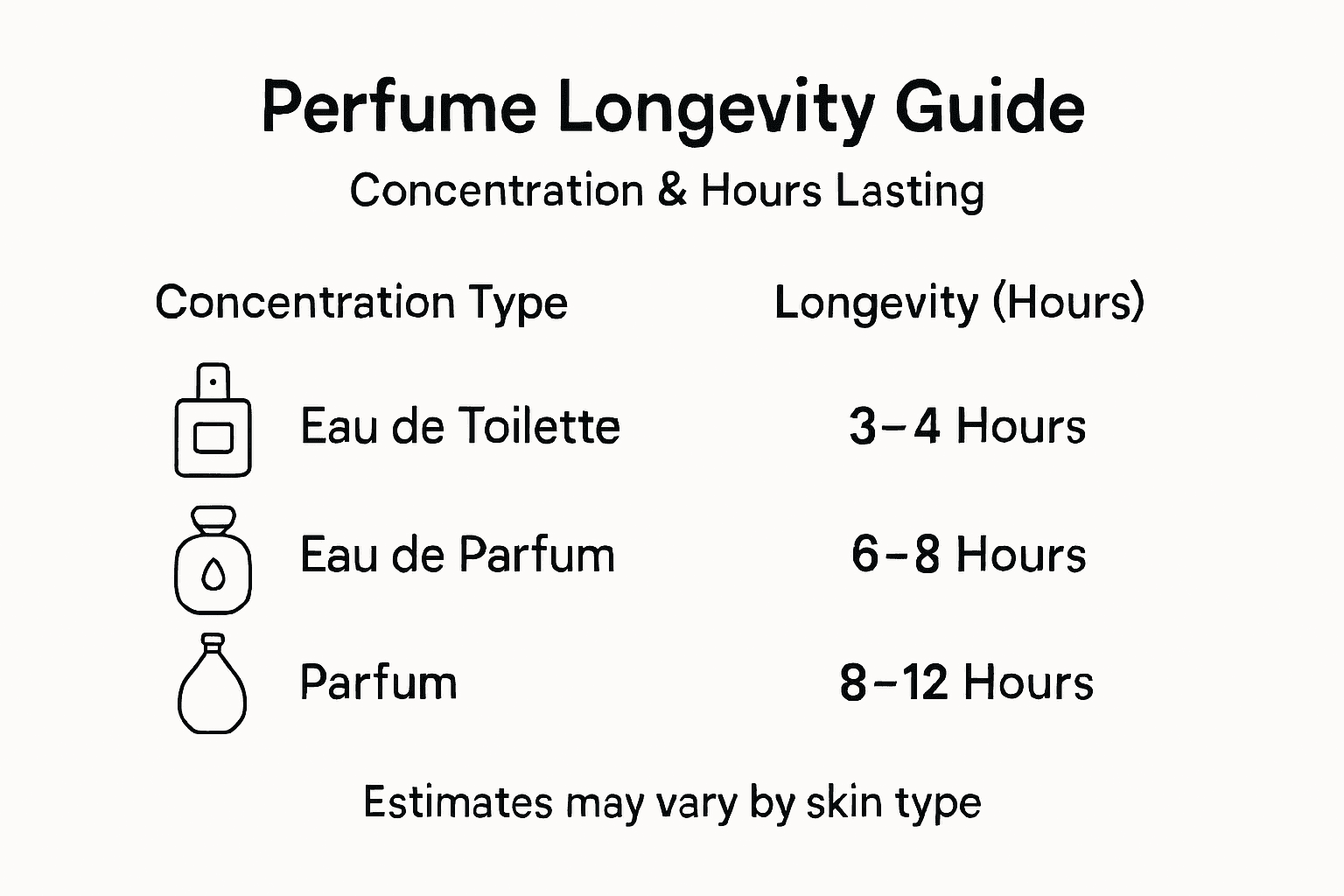
The Five Perfume Types Ranked by Longevity
Here’s the hierarchy from strongest to lightest:
- Parfum/Extrait (20-30% concentration): Lasts up to 24 hours; most expensive per milliliter; use sparingly (2-3 sprays)
- Eau de Parfum (15-20% concentration): Lasts 4-5 hours; premium pricing; affordable designer-inspired options available
- Eau de Toilette (5-15% concentration): Lasts 2-3 hours; budget-friendly; requires frequent reapplication
- Eau de Cologne (2-4% concentration): Lasts under 2 hours; light and fresh; mainly unisex or citrus scents
- Eau Fraiche (1-3% concentration): Lasts under 1 hour; barely registers as perfume; rarely recommended
Scent strength comparisons show why concentration matters beyond just longevity—higher concentrations also deliver richer, more complex scent development as the fragrance evolves on your skin.
To help clarify how different perfume types perform, here is a summary comparison:
| Perfume Type | Oil Concentration (%) | Typical Longevity | Cost Efficiency |
|---|---|---|---|
| Parfum/Extrait | 20–30 | Up to 24 hours | Most expensive per use |
| Eau de Parfum | 15–20 | 4–5 hours | Balanced for daily wear |
| Eau de Toilette | 5–15 | 2–3 hours | Requires reapplication |
| Eau de Cologne | 2–4 | Under 2 hours | Best for short bursts |
| Eau Fraiche | 1–3 | Less than 1 hour | Rarely recommended |
Why Eau de Parfum Wins for Most People
Eau de parfum sits in the sweet spot between longevity and value. It lasts most of your workday without requiring midday reapplication, yet costs significantly less than pure parfum.
This concentration range (15-20%) provides enough staying power that you’re not constantly respraying. Plus, when you find a designer-inspired option with quality formulation, you get luxury-level performance without luxury-level pricing.
The Parfum Premium
Pure parfum or extrait commands the highest prices because you use less. A single 1.7-ounce bottle lasts months due to the high concentration and sparse application needs.
But here’s the catch: not everyone needs 24-hour longevity. If you shower and change clothes daily, parfum is overkill. You’re paying for performance you don’t use.
The best perfume concentration is the one that matches your actual lifestyle, not the one with the highest price tag.
Testing fragrances helps reveal which concentration works for you. Some people need afternoon refreshing; others prefer shorter-wearing, lighter scents that won’t feel heavy by evening.
Making the Calculation
Cost-per-wear matters more than upfront price. A 50-milliliter eau de parfum at $60 that lasts five hours daily costs less per wearing than a $30 eau de toilette you reapply twice.
Consider your typical day. Do you need all-day longevity, or do you change outfits and environments frequently? Your answer determines which concentration actually represents value.
Pro tip: Start with eau de parfum concentration if you’re new to fragrance shopping—it offers the best balance of longevity, cost, and versatility without the commitment or expense of pure parfum.
Key Ingredients and Formulation for Extended Wear
Longevity doesn’t happen by accident. Behind every perfume that lasts all day is careful chemistry—the right mix of fragrance oils, alcohols, and stabilizing compounds working together. Understanding these ingredients helps you recognize quality formulations and why some perfumes outperform others at similar price points.
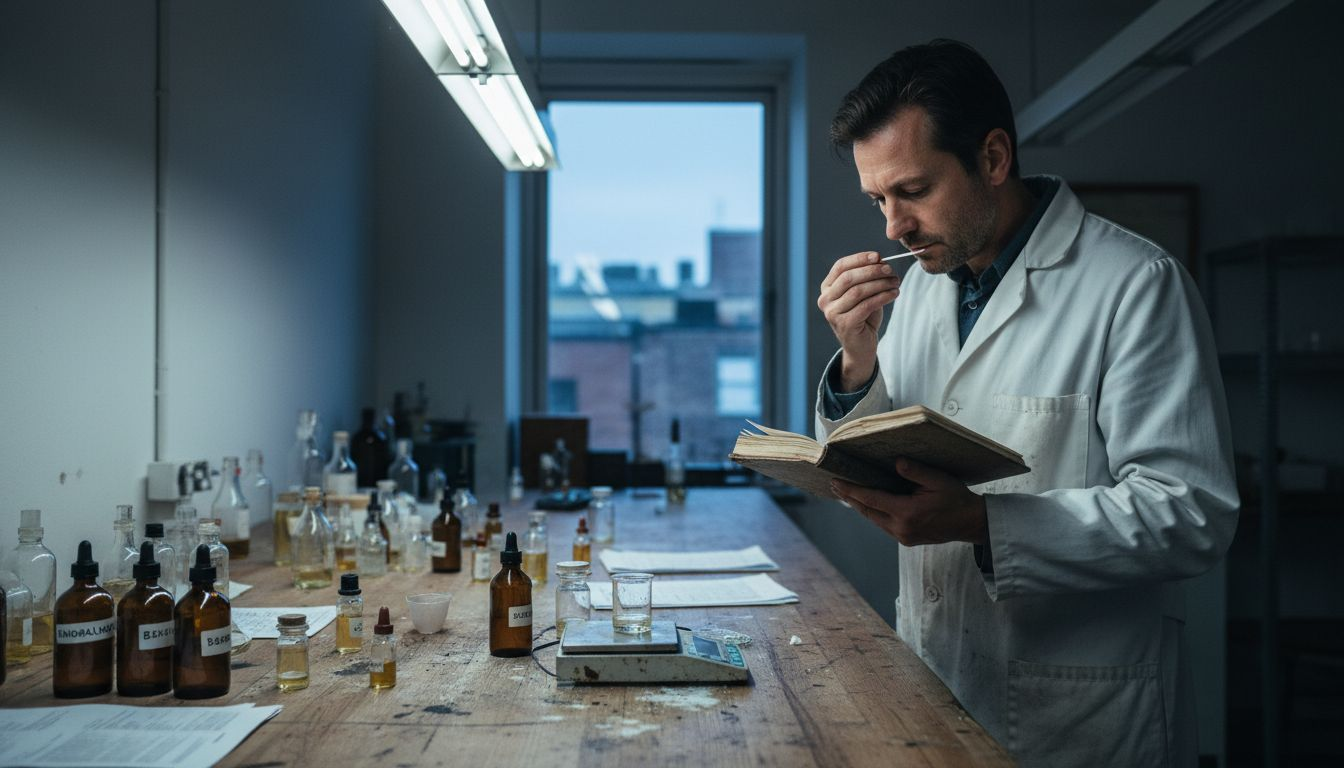
The secret to long-lasting scent lies in how ingredients interact. A fragrance with excellent base notes but weak fixatives won’t perform as well as one engineered specifically for extended wear. This is where formulation expertise matters most.
The Core Building Blocks
Every perfume contains these essential components:
- Fragrance oils (aromatics): The scent itself, typically 15-40% by volume depending on concentration
- Alcohol base: Usually 70-90% of the formula; carries fragrance and helps it disperse on skin
- Fixatives: Stabilize fragrance molecules and slow evaporation dramatically
- Water and other solvents: Help balance the formula and improve longevity
Fixatives are the game-changers. These compounds work by creating a molecular “anchor” that slows how fast fragrance evaporates. Fixative chemistry and stability determines whether a perfume fades within hours or lasts through your entire day.
Natural vs. Synthetic Fixatives
This is where eco-conscious shoppers often get confused. You might assume natural fixatives are superior, but that’s not always true.
Natural fixatives include musks, sandalwood, and oakmoss. They’re aromatic and add depth to fragrance. But they’re also expensive, inconsistent, and sometimes less stable than modern alternatives.
Synthetic fixatives like iso e super and galaxolide perform predictably, last longer, and cost less. Many are derived from sustainable sources. Cruelty-free perfumes frequently use high-quality synthetic fixatives because they eliminate the need for animal-derived musks.
Here’s how natural and synthetic fixatives differ in long-term performance and environmental impact:
| Fixative Type | Performance Consistency | Longevity in Perfume | Environmental Impact |
|---|---|---|---|
| Natural (e.g., musk, oakmoss) | Batch variability | Often moderate | Variable; can involve animal use |
| Synthetic (e.g., iso e super) | Highly predictable | Typically excellent | Lower animal impact; stable supply |
The best fixatives aren’t determined by origin—they’re determined by performance and how they complement your specific fragrance.
Why Formulation Quality Matters More Than Individual Ingredients
You could list impressive ingredients and still create a mediocre fragrance. It’s the formulation—how everything balances together—that determines real longevity.
A cheap perfume might use decent fragrance oils but skimp on fixatives, resulting in quick fading. A quality formulation balances fragrance concentration, fixative choice, and alcohol quality to create something that evolves beautifully and lasts.
The Volatility Factor
Fragrance molecules have different evaporation rates. Top notes (citrus, fresh florals) evaporate fastest. Base notes (woods, musks, vanillas) linger longest. Expert formulation controls this volatility through strategic fixative placement and molecular weight selection.
This is why fragrance development—how your scent changes from application through evening—matters as much as longevity. A well-formulated perfume should feel different at hour two versus hour six, not just “same smell getting fainter.”
What Makes Designer-Inspired Formulations Work
Affordable designer-inspired perfumes from quality makers use the same scientific principles as luxury versions. They invest in proper fixatives, quality fragrance compounds, and tested formulations that deliver staying power without premium pricing.
The difference isn’t usually the ingredients themselves—it’s the distribution channel and marketing costs you avoid with direct-to-consumer options.
Pro tip: Check if a perfume lists its concentration and key fixatives on the website or label; transparency about formulation suggests the maker is confident in their longevity claims and ingredient quality.
Vegan and Cruelty-Free Perfume Options Today
If you care about where your beauty products come from, vegan and cruelty-free perfumes aren’t a compromise anymore—they’re often superior to conventional options. The shift toward ethical fragrance production has created better formulations, more transparency, and genuinely long-lasting scents that align with your values.
Five years ago, choosing vegan perfume meant accepting shorter longevity or weird chemical smells. Today? You get luxury-quality formulations without animal-derived ingredients or animal testing. That’s a massive change for eco-conscious perfume lovers.
What Actually Makes a Perfume Vegan and Cruelty-Free
These terms mean different things, and confusion wastes your money:
- Vegan perfume: Contains zero animal-derived ingredients (no musk from deer glands, no lanolin, no carmine)
- Cruelty-free: No animal testing at any stage of development or production
- Cruelty-free + vegan: Both standards met—ethical from ingredient sourcing through final product
Not all cruelty-free perfumes are vegan. A fragrance might skip animal testing but still contain ambergris or other animal byproducts. Look for both certifications if both matter to you.
The Synthetic Fixative Advantage
Here’s where vegan perfumes actually shine: synthetic fixatives often outperform natural animal-derived alternatives. Modern sustainable and ethical fragrance production emphasizes synthetic replacements that deliver better longevity, stability, and performance without harming animals.
Synthetic musks, for example, last longer than traditional deer musk and cost less. They’re more consistent across batches, meaning you get reliable performance every time you buy the same fragrance.
Ingredient Transparency Matters
Vegan and cruelty-free brands typically list their ingredients openly because they’re proud of their sourcing. This transparency helps you spot quality formulations and understand what you’re actually wearing.
Check if brands disclose fixative types, alcohol quality, and sourcing practices. Companies confident in their ethics share these details. Those hiding ingredient lists usually have something to hide.
Why Designer-Inspired Vegan Perfumes Work
Affordable vegan options from quality makers use the same high-performance synthetic ingredients as luxury brands. The main difference? No markup for boutique retail or animal-testing infrastructure.
You’re not sacrificing longevity by choosing vegan. You’re actually getting innovative formulations developed specifically for ethical production. Many use cutting-edge synthetic fixatives that didn’t exist ten years ago.
Red Flags When Shopping
Avoid these misleading claims:
- “Natural” doesn’t mean vegan (natural musk still comes from animals)
- “Plant-based” doesn’t mean cruelty-free (animal testing may have occurred)
- Unlisted ingredients suggest the brand isn’t transparent about sourcing
- Vague terms like “ethical sourcing” without certification backing
True vegan and cruelty-free perfumes prove their standards through transparent ingredient lists and third-party certifications.
Look for actual certifications from organizations like Leaping Bunny, PETA, or Vegan Society rather than relying on brand claims alone. These verify practices beyond marketing language.
Pro tip: When comparing vegan perfumes, prioritize those listing specific synthetic fixatives and alcohol quality over those simply claiming “natural” or “plant-based,” since formulation transparency directly correlates with longevity performance.
Choosing, Applying, and Avoiding Common Mistakes
Buying the right perfume is only half the battle. How you choose it, apply it, and care for it determines whether you actually get eight hours of wear or watch it fade by lunch. Small technique changes create massive longevity differences.
Most people sabotage their own fragrances through application mistakes, poor storage, and unrealistic expectations. Once you understand what actually works, maintaining a long-lasting scent becomes automatic.
How to Choose a Long-Lasting Fragrance
Don’t rely on smelling a tester strip for five seconds. Your nose adapts instantly to fragrance, and a strip doesn’t replicate skin chemistry.
Instead:
- Test on clean, moisturized inner wrist or behind ear
- Wait 15 minutes for top notes to fade and base notes to emerge
- Smell multiple times over two hours to understand development
- Check the concentration level on the label
- Ask about fixative types if buying from knowledgeable retailers
Body chemistry varies dramatically based on skin pH, natural oils, and even diet. What lasts all day on your friend might fade in four hours on you. Application techniques and skin chemistry effects directly influence how long fragrance performs on individual skin.
The Critical Application Points
Where you spray matters more than how much you spray. These pulse points generate warmth that amplifies fragrance:
- Inner wrists (but don’t rub them together—this breaks fragrance molecules)
- Behind ears
- Inside elbows
- Base of throat
- Inside of knees
- Behind knees
Heat activates fragrance and helps it develop properly. Cool areas like collarbones work too, but won’t project as strongly. Never spray on clothing—fragrance needs skin contact to last.
Common Mistakes Killing Your Longevity
These errors waste money and leave you reapplying constantly:
- Over-spraying: More fragrance doesn’t equal longer wear; it just fades faster as excess evaporates
- Spraying and rubbing: Friction breaks aromatic molecules and accelerates fading
- Applying to dry skin: Dehydrated skin doesn’t hold fragrance; moisturize first
- Layering wrong products: Conflicting scents compete instead of complementing
- Storing in heat or sunlight: Temperature and light degrade fragrance molecules
- Using old perfume: Oxidation weakens concentration over time
The best application technique is two to three spritzes on pulse points, zero rubbing, and patience for the fragrance to develop.
Smart Application Strategy
Start conservative. Two spritzes on inner wrists and behind ears cost less and last longer than six spritzes everywhere. If you need more projection, reapply strategically mid-day rather than oversaturating initially.
Test your fragrance timing. Some people need reapplication at hour four; others get eight hours easily. Understanding your personal chemistry prevents wasting product through excessive application.
Storage Matters More Than Most Realize
Perfume degradation starts immediately in wrong conditions. Keep bottles in cool, dark places—not bathroom shelves with temperature swings. Sunlight, heat, and humidity damage fragrance molecules and shorten longevity dramatically.
Store away from direct light and temperature fluctuations. A bedroom closet beats a kitchen counter every time. Properly stored perfume lasts years; poorly stored bottles degrade within months.
Pro tip: Apply fragrance immediately after showering when skin is clean and slightly damp, then resist the urge to reapply for at least four hours—most “fading” is actually your nose adapting, not the fragrance disappearing.
Discover Lasting Luxury with Parfum.NYC
Many fragrance lovers struggle to find a truly long-lasting perfume that evolves beautifully on the skin without fading too quickly or losing complexity. This article highlights that formulation quality and fixative choice are the real secrets behind all-day scents. It also reveals common misconceptions like “more spray means longer wear” or “expensive equals longer lasting” which lead to frustration and wasted money.
At Parfum.NYC we understand these challenges and offer a curated collection of extrait de parfum inspired by iconic luxury scents designed to deliver extraordinary longevity and olfactory depth. Our cruelty-free and vegan formulations use premium fixatives and carefully balanced concentrations that perform well on all skin types. Whether you prefer floral, woody, or vibrant citrus notes explore our thoughtfully crafted options on the BESTSELLTER DISPLAY – PARFUM.NYC or browse all choices at SHOP ALL – PARFUM.NYC.
Experience the difference that science-backed, clean, and affordable fragrance makes. Visit https://parfum.nyc today and find the perfect long-lasting perfume that fits your lifestyle. Take the guesswork out of lasting scent with our premium selection and enjoy free shipping plus a 30-day satisfaction guarantee on every order.
Frequently Asked Questions
What is considered a long-lasting perfume?
Long-lasting perfume is defined by its ability to maintain its scent on your skin for eight hours or more. It delivers a sustained olfactory experience that eventually reveals richer notes as the fragrance evolves rather than fading quickly.
What factors contribute to the longevity of a perfume?
The longevity of a perfume depends on its fragrance concentration, the presence of fixatives that slow down evaporation, and the quality of the formulation. Higher concentrations of aromatic compounds and effective fixatives help maintain the scent for longer periods.
Does a higher price guarantee a longer-lasting fragrance?
No, the price of a perfume does not necessarily determine its longevity. A well-formulated, affordable fragrance can outlast an expensive one if it contains quality fixatives and ingredients.
How can I ensure my perfume lasts longer when I apply it?
To improve longevity, apply perfume on clean, moisturized skin at pulse points like the inner wrists and behind the ears. Avoid rubbing the fragrance into your skin, as this can accelerate fading. Proper storage, away from heat and light, also contributes to extended wear.


