


Finding an affordable luxury fragrance that truly lasts can feel like an art form for many eco-conscious young professionals in New York City. Scent often fades fast in the city’s demanding climate and constant movement, leaving you searching for ways to make your favorite perfume linger. By understanding the impact of fragrance molecule retention and using targeted preparation and application methods, you can elevate your daily scent ritual for long-lasting, sustainable results.
Table of Contents
- Step 1: Prepare Skin For Fragrance Absorption
- Step 2: Select The Optimal Perfume Location
- Step 3: Apply Perfume With Precise Technique
- Step 4: Layer And Enhance Scent Longevity
- Step 5: Verify Scent Performance And Adjust
Quick Summary
| Key Point | Explanation |
|---|---|
| 1. Prepare Skin for Maximum Absorption | Cleanse, exfoliate, and moisturize to create an ideal foundation for fragrance retention and longevity. |
| 2. Apply Fragrance on Pulse Points | Focus on locations like wrists and neck that emit heat to enhance scent diffusion and projection. |
| 3. Use Proper Application Techniques | Hold the bottle 6-8 inches away and apply in a gentle mist for even distribution and longevity. |
| 4. Layer Scents for Extended Longevity | Use complementary products and techniques to create a rich, lasting fragrance profile. |
| 5. Monitor and Adjust Scent Performance | Track how your fragrance evolves with time and in different conditions to tailor your sensory experience. |
Step 1: Prepare skin for fragrance absorption
Preparing your skin is the critical first step in creating a perfect perfume experience that allows maximum fragrance retention and longevity. By understanding how to optimize your skin’s condition, you can transform a simple scent application into a luxurious sensory journey.
To create an ideal foundation for fragrance absorption, focus on three key elements: cleansing, hydration, and creating a smooth surface. Fragrance molecule retention depends significantly on your skin’s preparation. Here’s a strategic approach:
- Cleanse thoroughly with a gentle, non-oily cleanser
- Exfoliate once weekly to remove dead skin cells
- Moisturize immediately before fragrance application
- Avoid using heavy, greasy lotions that can interfere with scent molecules
The science behind fragrance absorption is fascinating. Your skin’s outer layer, the stratum corneum, acts as a critical barrier that can either enhance or diminish scent performance. Well-hydrated skin with an intact moisture barrier provides the optimal canvas for fragrance molecules to settle and gradually release.
Here’s how typical skin types affect fragrance performance:
| Skin Type | Fragrance Longevity | Absorption Rate |
|---|---|---|
| Dry skin | Scent fades quickly | Rapid absorption |
| Oily skin | Extended longevity | Slower absorption |
| Combination skin | Mixed performance | Varies by area |
| Well-moisturized | Optimal longevity | Balanced absorption |
Properly prepared skin can significantly extend your perfume’s staying power and complexity.
Pro tip: Apply an unscented, lightweight moisturizer 3-5 minutes before your perfume to create the perfect absorption environment.
Step 2: Select the optimal perfume location
Choosing the right spots to apply your perfume can dramatically enhance its performance, projection, and overall sensory experience. Understanding the science behind strategic fragrance placement will help you maximize your scent’s potential and ensure a sophisticated, long-lasting impression.
Perfume experts recommend focusing on your body’s pulse points for optimal fragrance diffusion. These strategic locations emit natural heat that helps volatilize and distribute fragrance molecules more effectively. Your ideal perfume application zones include:
- Inner wrists
- Base of the neck
- Behind the ears
- Inside of elbows
- Décolletage area
Each of these locations offers unique advantages for scent projection. The inner wrists and neck are particularly effective because they generate consistent warmth, helping your fragrance gradually unfold its complex notes. The blood vessels close to the skin’s surface create a natural diffusion mechanism that transforms your perfume from a simple application to an evolving olfactory experience.
Key differences among popular fragrance application sites:
| Application Site | Heat Level | Scent Projection | Visibility |
|---|---|---|---|
| Inner wrists | High | Moderate | Occasionally visible |
| Neck | High | Strong | Usually visible |
| Behind ears | Moderate | Subtle | Rarely visible |
| Inside elbows | Medium | Gentle | Mostly hidden |
| Décolletage | High | Prominent | Visible with low necklines |
Strategic perfume placement can transform a basic scent into a captivating personal signature.
Pro tip: Avoid rubbing your wrists together after application, as this can crush and alter the delicate molecular structure of your fragrance.
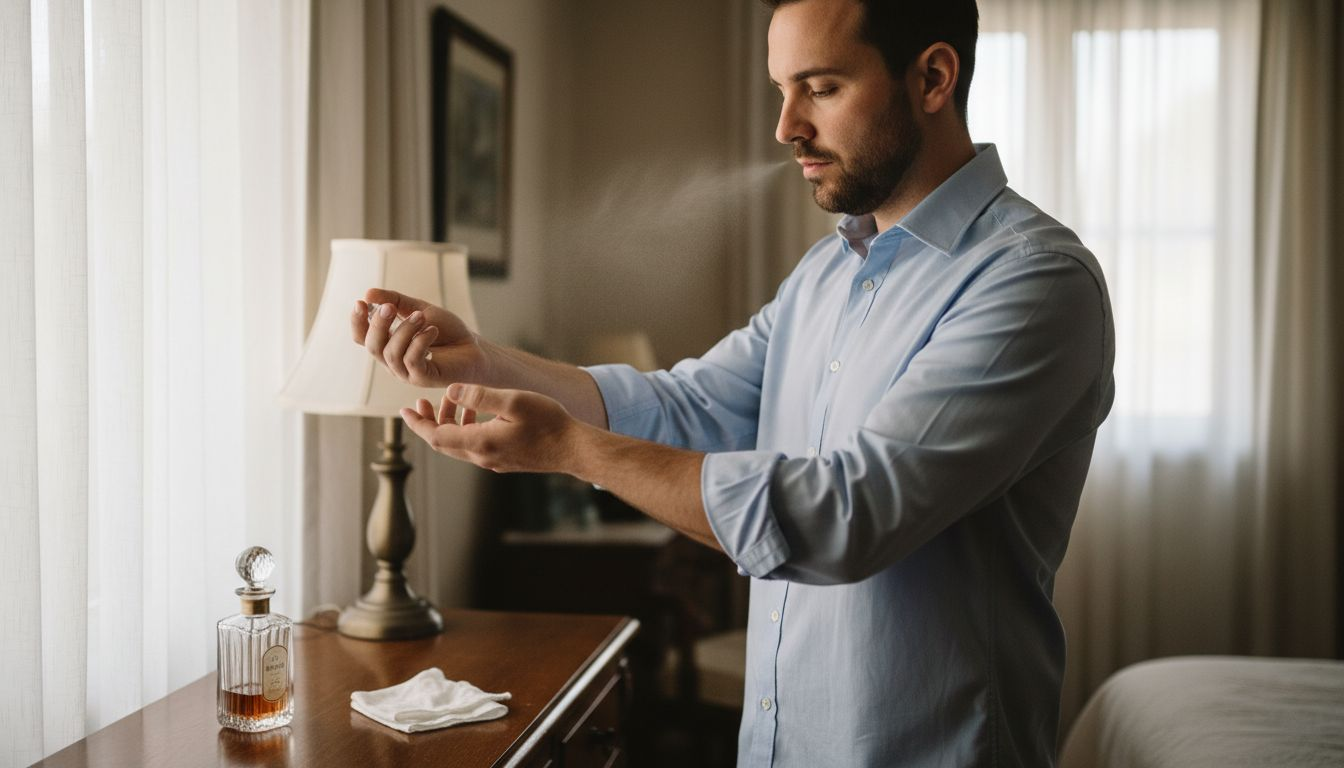
Step 3: Apply perfume with precise technique
Mastering the art of perfume application requires more than just spraying randomly. Your technique can dramatically influence how long your fragrance lasts and how beautifully its complex notes develop throughout the day.
Perfection starts with understanding precise fragrance application methods. Professional fragrance experts recommend a strategic approach that preserves the delicate molecular structure of your scent. Follow these key techniques:
- Hold the bottle 6-8 inches from your skin
- Apply to clean, moisturized pulse points
- Use a light, gentle misting motion
- Spray in a single, smooth movement
- Allow fragrance to settle naturally
The goal is creating an even, subtle layer that allows your perfume to breathe and evolve. Spraying from a slight distance prevents overwhelming concentration and helps distribute the fragrance molecules uniformly across your skin. Think of it like painting a delicate watercolor - precision matters more than quantity.
A masterful perfume application transforms a simple scent into a personal olfactory signature.
Pro tip: Let your perfume settle naturally without rubbing, which can break down the intricate fragrance molecular structure.
Step 4: Layer and enhance scent longevity
Transforming a simple perfume application into a lasting sensory experience requires strategic layering and understanding the science behind fragrance persistence. Your goal is creating a multidimensional scent profile that lingers elegantly throughout the day.
Professional fragrance experts recommend using fixative techniques for extended scent retention). By carefully selecting complementary products and application methods, you can dramatically enhance your perfume’s staying power. Consider these strategic layering approaches:
- Use matching body lotion before perfume
- Select scents with similar note profiles
- Apply unscented moisturizer as a base
- Choose fragrances with natural fixatives
- Reapply strategically during the day
The art of scent layering involves creating a harmonious foundation that allows fragrance molecules to develop and release slowly. Think of your perfume like a fine musical composition - each layer contributes to the overall complexity and depth of the olfactory experience.
Masterful fragrance layering transforms a simple scent into a sophisticated personal statement.
Pro tip: Focus on layering fragrances from the same scent family to create a more cohesive and long-lasting aromatic profile.
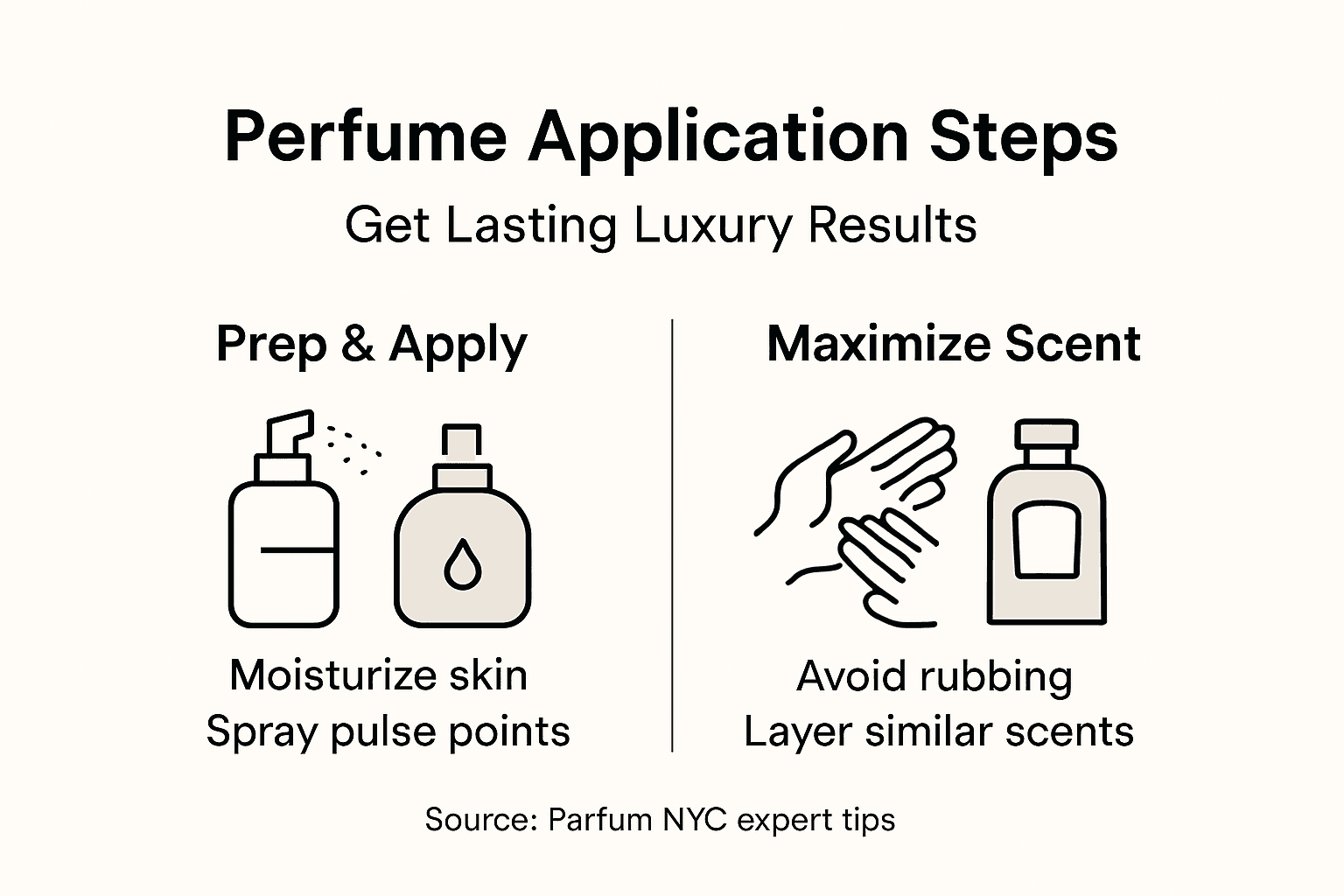
Step 5: Verify scent performance and adjust
Mastering your perfume’s performance requires a scientific yet intuitive approach to understanding how your fragrance interacts with your unique body chemistry. Think of this step as a personalized scent calibration that transforms your perfume from a generic product into a tailored sensory experience.
Fragrance performance testing involves methodical observation and strategic adjustments. Professional fragrance enthusiasts know that each application is an opportunity to fine-tune your scent profile. Here are key verification strategies:
- Track wear time and intensity
- Note skin reaction and scent evolution
- Compare performance in different environments
- Document personal fragrance feedback
- Adjust application technique as needed
Understanding your perfume’s unique behavior means paying attention to subtle changes throughout the day. Some fragrances might bloom beautifully in cool weather but fade quickly in heat, while others might interact differently with your skin’s natural oils.
Your perfume is a dynamic experience, not a static product.
Pro tip: Keep a small fragrance journal to track how different perfumes perform on your skin under various conditions.
Elevate Your Perfume Application to Luxury Longevity
Mastering the art of perfume application as described in “How to Apply Perfume Correctly for Lasting Luxury Results” reveals the challenge of extending fragrance wear while preserving its complexity. If you struggle with short-lived scents or want to unlock the full potential of your favorite fragrance notes through proper skin preparation and layering, you are not alone. This article highlights critical steps such as moisturizing before application and selecting pulse points—key tactics to enhance scent diffusion and longevity.
At Parfum.NYC, we understand these challenges and deliver exquisite, long-lasting extrait de parfum inspired by iconic luxury scents. Our cruelty-free, vegan, and clean formulations excel in staying power precisely because they are designed for optimal skin interaction. With collections tailored by scent families and a user-friendly scent finder quiz, you can discover fragrances that align perfectly with your unique chemistry.
Experience the difference that premium quality and expert formulation make. Start elevating your daily ritual by exploring our curated range at Parfum.NYC. Apply smarter, linger longer, and let your fragrance become a sophisticated personal signature today.
Frequently Asked Questions
How do I prepare my skin for better fragrance absorption?
To prepare your skin for better fragrance absorption, cleanse thoroughly with a gentle, non-oily cleanser, exfoliate weekly, and apply a lightweight, unscented moisturizer 3-5 minutes before your fragrance. This sets the ideal foundation for optimal scent retention.
Where are the best pulse points to apply perfume for lasting results?
The best pulse points to apply perfume include your inner wrists, base of the neck, behind the ears, inside of elbows, and the décolletage area. Focus on these areas to enhance fragrance diffusion and longevity due to their natural warmth.
What is the correct technique for applying perfume?
Hold the perfume bottle 6-8 inches from your skin, and use a gentle misting motion to apply to clean, moisturized pulse points. Avoid rubbing your wrists together after application, as this can alter the fragrance’s molecular structure and reduce scent effectiveness.
How can I layer fragrances to enhance their longevity?
To enhance fragrance longevity, layer scents by using complementary products such as matching body lotions or lighter fragrances with similar notes. Consider applying an unscented moisturizer first, as it acts as a base to boost scent retention throughout the day.
How do I test my perfume’s performance and make adjustments?
To test your perfume’s performance, track its wear time, intensity, and how it evolves on your skin in different environments. Document your observations in a fragrance journal, and adjust your application technique based on your findings to maximize your scent experience.
What factors impact how long my perfume lasts on my skin?
Factors that impact how long your perfume lasts include your skin type, hydration level, and the climate. For example, if you have dry skin, moisturize adequately to help retain fragrance longer, as dry skin tends to absorb scent quickly.


