


Finding a perfume that matches your style should not mean compromising your values. For eco-conscious New Yorkers who care about animal welfare and love luxury, the search for authentic cruelty-free fragrance often feels confusing. This guide cuts through the myths and marketing buzzwords, showing you how to spot real cruelty-free perfume and understand why certifications from groups like Leaping Bunny or PETA matter for your routine and the planet.
Table of Contents
- Cruelty-Free Perfume Defined And Common Myths
- Vegan Vs. Cruelty-Free Perfume: Key Differences
- Certifications And Global Safety Regulations
- Eco-Conscious Benefits For Consumers And Industry
- Risks, Challenges, And The Alternatives Compared
Key Takeaways
| Point | Details |
|---|---|
| Cruelty-Free Definition | Cruelty-free perfumes are made without any animal testing at any development stage, ensuring both ingredients and final products are tested ethically. |
| Certification Importance | Look for third-party certifications like Leaping Bunny or PETA to ensure claims of cruelty-free standards are verified and trustworthy. |
| Vegan vs. Cruelty-Free | Understand that cruelty-free focuses on testing practices while vegan concerns ingredient sourcing; a product can be one, both, or neither. |
| Health and Environmental Impact | Choosing eco-conscious perfumes supports ethical sourcing, reduces chemical exposure, and promotes sustainability in the fragrance industry. |
Cruelty-free perfume defined and common myths
Cruelty-free perfume means fragrance made without animal testing on any ingredients or the finished product. It’s a commitment to creating scent without harming animals in the development process.
This definition matters because the beauty industry has a complicated history with animal testing. Some ingredients still require testing in certain regions, and not all brands disclose their practices transparently.
What Cruelty-Free Actually Means
Cruelty-free perfume goes beyond just avoiding the final product test. It requires that neither the fragrance formula nor any individual ingredient was tested on animals at any stage of development.
Key requirements include:
- No animal testing on the finished fragrance
- No animal testing on individual ingredients
- No testing by parent companies or suppliers
- No testing in regions that legally require it (unless unavoidable)
- Transparency in sourcing and manufacturing
Certification matters. A cruelty-free label means nothing without third-party verification from organizations like Leaping Bunny or PETA.
Common Myths About Cruelty-Free Perfume
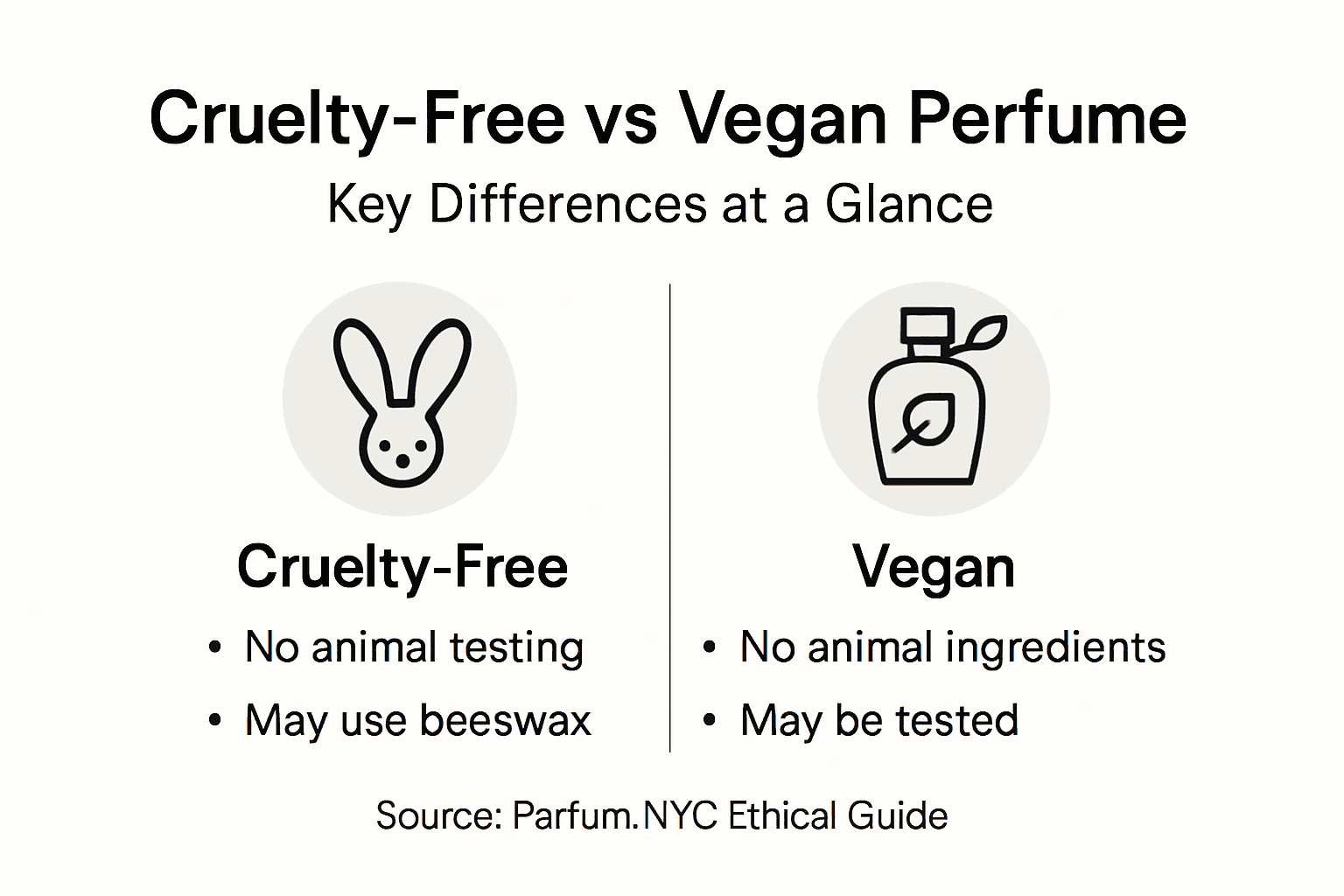
People often assume cruelty-free and vegan are the same thing. They’re not. Cruelty-free means no animal testing. Vegan means no animal-derived ingredients. A perfume can be cruelty-free but contain honey or beeswax.
Another myth: large, established brands are automatically cruelty-free. False. Many major perfume houses test on animals or sell in markets that require animal testing. Size and reputation don’t equal ethics.
Some think cruelty-free costs significantly more. Not necessarily. Brands like Parfum.NYC offer designer-inspired scents with cruelty-free, vegan formulations at affordable prices, proving luxury doesn’t require premium markups.
People also believe cruelty-free perfumes sacrifice quality or longevity. Modern formulations using clean ingredients and extrait de parfum concentrations deliver lasting scent and premium performance without compromise.
Why Certifications Matter
Looking for logos from Leaping Bunny, PETA, or Choose Cruelty-Free gives you confidence. These organizations audit brands and verify claims independently.
Without certification, “cruelty-free” becomes marketing language with no real backing. Certifications hold brands accountable and protect both animals and consumers seeking genuine ethical products.
Pro tip: Check the brand’s website for certification logos before purchasing. If you can’t find third-party verification, email the company directly asking about their testing practices and which certifications they hold.
Vegan vs. cruelty-free perfume: key differences
Think cruelty-free and vegan mean the same thing? They don’t. Understanding the distinction helps you make purchases aligned with your actual values. Both matter, but they address completely different ethical concerns.
Cruelty-free focuses on testing practices. Vegan focuses on ingredient sourcing. A perfume can be one, both, or neither.
The Core Difference
Cruelty-free means no animal testing at any stage of production—no rabbits, mice, or guinea pigs harmed during development. It doesn’t say anything about what’s actually in the bottle.
Vegan means zero animal-derived ingredients. No beeswax, no honey, no musk, no ambergris. Everything comes from plants or synthetic labs instead.

The catch? A perfume can be vegan but tested on animals. Or cruelty-free but contain beeswax. You need both certifications if both matter to you.
To clarify the differences between cruelty-free and vegan perfumes, here is a concise comparison:
| Aspect | Cruelty-Free Perfume | Vegan Perfume |
|---|---|---|
| Animal Testing | None at any stage | May still occur |
| Animal Ingredients | May include honey, beeswax, etc. | Absolutely none |
| Certification Needed | Leaping Bunny, PETA | Vegan Society, Certified Vegan |
| Ethical Focus | Protects animal welfare | Prevents animal exploitation |
Common Animal-Derived Ingredients
Perfumes historically relied on animal sources for depth and complexity. Here’s what you might find in traditional fragrances:
- Musk: Originally from musk deer glands; now mostly synthetic
- Ambergris: Waxy substance from whale digestive systems
- Beeswax: Used in formulations and packaging
- Honey: Adds sweetness and texture to scents
- Lanolin: Derived from sheep’s wool
Vegan perfumes replace these with plant extracts or lab-created molecules that deliver the same sensory experience without animal harm.
Why The Confusion Exists
Brands sometimes use both terms interchangeably, making it harder to shop intentionally. Some “clean” brands advertise one without guaranteeing the other. Marketing language blurs what’s actually ethical.
Both certifications matter for different reasons. Cruelty-free protects animals during testing; vegan eliminates animal exploitation from ingredients.
Making Informed Choices
Check for specific certifications rather than trusting marketing claims alone.
- Cruelty-free certification: Leaping Bunny, PETA, Choose Cruelty-Free
- Vegan certification: Vegan Society, Certified Vegan
- Both: Some brands hold multiple certifications
Luxury perfumes at Parfum.NYC emphasize both cruelty-free sourcing and vegan formulations, proving you don’t sacrifice quality or longevity when choosing ethically.
Pro tip: When browsing, look at the ingredient list first. If you spot beeswax or honey listed, it’s not vegan. Then check the packaging for certification logos to verify cruelty-free status. Most brands now include both on their websites.
Certifications and global safety regulations
Not all cruelty-free certifications carry the same weight. Some are backed by rigorous testing. Others are marketing labels with minimal oversight. Knowing the difference protects both your values and your skin.
Global safety standards exist because fragrance ingredients affect real people. Understanding which certifications matter helps you identify trustworthy brands in a crowded market.
What Safety Standards Actually Do
IFRA standards establish safety guidelines for fragrance ingredients based on scientific risk assessments. The International Fragrance Association sets these benchmarks, and major brands follow them to ensure consumer safety worldwide.
These standards address concentration limits, usage guidelines, and ingredient restrictions. They’re not optional—they’re the foundation of responsible fragrance manufacturing across the industry.
When a brand complies with IFRA standards, it means their formula has been tested for safety at typical usage levels. That matters whether you’re buying a $15 alternative or a $500 designer scent.
Global Regulatory Differences
Regulations vary significantly across major markets. The European Union bans certain ingredients entirely. The United States allows some that Europe prohibits. China historically required animal testing; that’s gradually changing.
Cosmetic regulations differ by region, creating challenges for brands selling internationally. A perfume legal in the EU might not meet US standards. A cruelty-free product in New York might face restrictions in Shanghai.
This fragmentation means certifications become crucial. They bridge the gap between conflicting regulations and provide clarity for consumers.
Key Certifications to Look For
Not all seals mean the same thing. Here’s what actually matters:
- Leaping Bunny: The gold standard for cruelty-free verification. Annual audits required.
- PETA certified: Prohibits animal testing; regularly monitors compliance.
- Vegan Society: Ensures zero animal-derived ingredients; checks suppliers.
- IFRA compliant: Confirms safety standards are met; ingredient-level oversight.
- ISO standards: Quality management and safety documentation.
Brands like Parfum.NYC prioritize these certifications, ensuring their designer-inspired extraits meet strict safety standards while maintaining cruelty-free and vegan credentials.
Explore the main certifications and what they guarantee for consumers:
| Certification | What It Verifies | Audit Frequency | Industry Recognition |
|---|---|---|---|
| Leaping Bunny | No animal testing at any stage | Annual audits | Widely trusted |
| PETA Certified | No animal testing; ongoing checks | Regular monitoring | Strong consumer support |
| Vegan Society | Zero animal-derived ingredients | Supplier verification | Global vegan standard |
| IFRA Compliant | Safe ingredient usage and limits | Scientific updates | Major brands participate |
Why Certifications Matter For You
Certifications reduce your risk. They mean someone independent verified the brand’s claims. Without them, you’re trusting marketing language alone.
Real certification requires real accountability. Third-party audits protect consumers far more than brand promises.
Brands with multiple certifications show genuine commitment. They’ve invested in compliance across testing practices, ingredient sourcing, and safety documentation.
Pro tip: Look for certification logos on product pages and packaging before purchasing. If a brand claims to be cruelty-free but lacks Leaping Bunny or PETA certification, email them asking which certifications they hold and why. Legitimate brands respond with specific details.
Eco-conscious benefits for consumers and industry
Choosing cruelty-free perfume isn’t just about animal welfare. It ripples across your health, your community, and the planet. The benefits extend far beyond the bottle.
When you buy eco-conscious fragrance, you’re voting for an industry that prioritizes responsibility. Brands listen to consumer demand, and your choices shape what gets produced next.
Health Benefits You Actually Feel
Eco-friendly perfumes use non-toxic ingredients that reduce synthetic chemicals and allergens. This means fewer headaches, fewer skin reactions, and cleaner air in your home.
Traditional fragrances often contain synthetic musks and phthalates that accumulate in your body over time. Natural, plant-based alternatives deliver the same scent experience without the chemical load.
Your lungs thank you. Your skin thanks you. That’s not marketing—that’s biology.
Environmental Impact That Matters
Fragrance ingredients end up in waterways. When you choose biodegradable formulas, you reduce chemical pollution affecting aquatic ecosystems and drinking water supplies.
Sustainable packaging reduces waste dramatically:
- Refillable bottles cut plastic consumption by up to 80%
- Recyclable materials prevent landfill accumulation
- Smaller, concentrated formulas require less shipping emissions
- Minimal packaging design reduces cardboard waste
A single bottle might seem insignificant. But multiply that across thousands of eco-conscious consumers in NYC alone, and the impact becomes real.
Supporting Ethical Communities
Sustainable fragrance sourcing includes fair trade partnerships that support farming communities and ensure workers earn living wages.
When brands prioritize ethical sourcing, they’re investing in communities dependent on fragrance ingredient production. That means better schools, healthcare, and economic stability in regions that grow vanilla, jasmine, and other natural essences.
Your purchase directly impacts real people.
Industry Transformation
Consumer demand drives innovation. As more people choose cruelty-free options, brands invest in cleaner formulations and sustainable packaging. This creates competition around ethics, not just price.
Your wallet influences industry priorities. Brands follow consumer values because they have to survive in a changing market.
Eco-conscious choices signal to manufacturers what matters. They respond by innovating safer ingredients, reducing waste, and expanding sustainable practices.
Pro tip: Check a brand’s supply chain transparency on their website before buying. Legitimate eco-conscious companies publish detailed information about ingredient sourcing, manufacturing partners, and packaging materials. If you can’t find this information, ask—transparency is a mark of genuine commitment to sustainability.
Risks, challenges, and the alternatives compared
Cruelty-free perfume sounds perfect until you start researching. The reality is more complex. Real challenges exist, and understanding them helps you make smarter choices.
No ethical choice is perfectly risk-free. The goal is finding options that align with your values while minimizing actual harm to your body and the planet.
Health Risks You Should Know About
Perfume ingredients carry potential health risks including allergies, respiratory issues, and hormone disruption from synthetic chemicals. These occur in both conventional and some “natural” fragrances.
Natural doesn’t automatically mean safe. Plant-based ingredients can trigger allergies just like synthetics. Limonene from citrus oils causes contact dermatitis in sensitive individuals. Rose oil can irritate respiratory systems in high concentrations.
The difference? Better labeling and transparency help you identify what triggers your body.
Industry Challenges That Matter
Fragrance formulas remain largely undisclosed. Companies claim proprietary protection, so you rarely know exactly what’s in your bottle beyond the top-note ingredients.
Regulatory gaps create problems:
- Limited long-term toxicity data for many ingredients
- Inconsistent global safety standards
- Lack of disclosure requirements for fragrance components
- Slow approval timelines for new alternatives
These gaps exist in both conventional and cruelty-free sectors. Being cruelty-free doesn’t guarantee complete transparency about every ingredient.
Alternative Testing Methods
In vitro and computational testing methods replace animal testing while maintaining safety verification. These newer approaches use human cell cultures and computer modeling instead of animal models.
The catch? They’re still being standardized and validated. Some regulators accept them. Others require traditional testing data. This creates friction for brands trying to be truly cruelty-free while meeting global regulations.
Synthetic vs. Natural Alternatives
Both carry trade-offs. Here’s the honest breakdown:
- Synthetic alternatives: Lab-created molecules, vegan, often more stable formulas, but require energy-intensive manufacturing
- Natural alternatives: Plant-derived, renewable, but variable potency and higher crop impact
- Hybrid approach: Combines both for optimal safety, sustainability, and performance
No option is perfect. The best choice balances your health priorities, environmental concerns, and personal values.
Cruelty-free brands increasingly use hybrid approaches, mixing plant extracts with safe synthetics to create stable, effective formulas without animal testing.
Making Your Decision
Acknowledge the trade-offs. Accept that perfect doesn’t exist. Focus instead on brands that prioritize transparency about what they’re trying to solve.
A brand claiming zero risk is lying. One that openly discusses challenges and documents their testing methods deserves your trust.
Pro tip: Patch test any new fragrance on your inner wrist for 48 hours before applying elsewhere. If you have sensitive skin or respiratory issues, start with unisex fragrances formulated for sensitive skin, which typically use lower concentrations of potential irritants.
Discover Ethical Luxury With Cruelty-Free Scents at Parfum.NYC
Choosing cruelty-free perfume means valuing animal welfare without sacrificing sophistication or longevity. If you seek premium fragrances that align with your ethical values and avoid animal testing or animal-derived ingredients you need offerings that deliver both luxury and transparency. Parfum.NYC specializes in high-quality extrait de parfum inspired by iconic designer scents that are cruelty-free, vegan, and crafted with clean ingredients to ensure you experience beauty without compromise.
Explore our curated collections such as Floral and Fougere designed for discerning fragrance enthusiasts seeking responsible choices.
Elevate your scent game with Parfum.NYC today. Enjoy free shipping on all orders and a 30-day satisfaction guarantee while embracing ethical luxury. Start shopping the full range of designer-inspired cruelty-free perfumes now at Parfum.NYC and make a conscious choice that supports animals, the environment, and your personal style.
Frequently Asked Questions
What does cruelty-free perfume mean?
Cruelty-free perfume is a fragrance that has not been tested on animals at any stage of development, including individual ingredients and the finished product.
How does cruelty-free differ from vegan perfume?
Cruelty-free refers to the absence of animal testing, whereas vegan means that no animal-derived ingredients are included. A cruelty-free perfume can contain ingredients like beeswax or honey, which would not be found in a vegan perfume.
Why are certifications important for cruelty-free perfumes?
Certifications from reputable organizations like Leaping Bunny or PETA ensure that the brand has been independently verified as cruelty-free, providing consumers with confidence in the brand’s ethical practices.
Are cruelty-free perfumes of lower quality compared to conventional ones?
No, modern cruelty-free perfumes often use high-quality formulations with clean ingredients and can deliver lasting scents and premium performance without compromising on quality.


