


Searching for a Designer-Inspired Perfume that matches your values and budget in New York City can feel like an endless cycle of compromises. Designer-inspired perfumes prove you do not have to sacrifice quality or ethics for affordability. These fragrances combine legitimately crafted scent profiles with cruelty-free standards, delivering premium ingredients without luxury brand markup. Discover how real artistry meets accessible pricing and why myths about designer-inspired scents miss what matters most to eco-conscious professionals.
Table of Contents
- Designer-inspired Perfume Defined And Common Myths
- Categories And Scent Profiles Explained
- How Cruelty-free And Vegan Formulas Work
- Clean Ingredients And Formulation Standards
- Price, Value, And Ethical Advantages Compared
Key Takeaways
| Point | Details |
|---|---|
| Quality vs. Price | Designer-inspired perfumes offer comparable quality and longevity to luxury scents at a fraction of the price due to direct pricing and streamlined production. |
| Ingredient Transparency | These perfumes often use the same premium ingredients as luxury brands, focusing on high concentrations of fragrance oils for lasting scents. |
| Ethical Considerations | Many designer-inspired options prioritize cruelty-free and vegan formulations, providing consumers with clean and ethical choices. |
| Fragrance Categories | Understanding scent families helps consumers find fragrances that match their preferences and lifestyle, ensuring satisfying purchases. |
Designer-inspired perfume defined and common myths
Designer-inspired perfume isn’t a knockoff or cheap imitation. It’s a legitimately crafted fragrance that draws inspiration from luxury scents without copying their exact formulas.
Think of it like this: if a luxury fragrance costs $300 for 1.7 oz, a designer-inspired version delivers comparable quality and longevity at a fraction of the price. The difference? Direct pricing and streamlined production, not inferior ingredients.
What designer-inspired perfume actually is
Designer-inspired fragrances are complex scent structures created within commercial frameworks that balance artistry with accessibility. They use premium ingredients—often the same suppliers as luxury brands—and focus on performance.
They’re designed for real people with real budgets:
- Long-lasting formulations using high concentrations of fragrance oils
- Quality ingredients sourced from established fragrance suppliers
- No boutique markups that inflate luxury brand prices
- Cruelty-free options that align with ethical values
Designer-inspired perfumes deliver genuine quality at accessible prices—not watered-down versions of luxury fragrances.
Common myths debunked
Myth 1: Designer-inspired means synthetic or low-quality.
False. Many use the same natural and synthetic ingredients as luxury brands. The formulation matters more than the brand name printed on the bottle.
Myth 2: They don’t last as long.
Incorrect. Quality designer-inspired perfumes feature extrait de parfum concentrations that rival luxury fragrance longevity. Some last 8+ hours on skin.
Myth 3: They’re illegal or infringe on trademarks.
Not at all. Inspiration-based fragrances are legal. They don’t copy proprietary formulas or use protected brand names. Think of them as the fragrance equivalent of homage fashion design.
Myth 4: You’re settling if you choose designer-inspired.
You’re actually being strategic. You get premium quality without paying for marketing budgets and luxury retail overhead.
Myth 5: Cruelty-free perfumes are weaker or less refined.
Modern cruelty-free formulations perform just as well as conventional options. Ethical doesn’t mean compromised.
Here’s what actually separates quality designer-inspired fragrances from mediocre ones:
- Fragrance concentration (eau de parfum vs. eau de toilette)
- Ingredient sourcing and quality standards
- Formulation expertise and scent development time
- Longevity testing before release
- Customer reviews and performance data
Pro tip:Check the fragrance concentration percentage on the bottle—40-50% fragrance oils indicates premium quality comparable to luxury brands costing triple the price.
Categories and scent profiles explained
Perfume families organize fragrances by their dominant characteristics, making it easier to find scents that match your preferences and lifestyle. Understanding these categories helps you navigate options without getting overwhelmed by thousands of choices.
Each fragrance family has a distinct personality and works best for different occasions. Your job is finding which ones resonate with you.
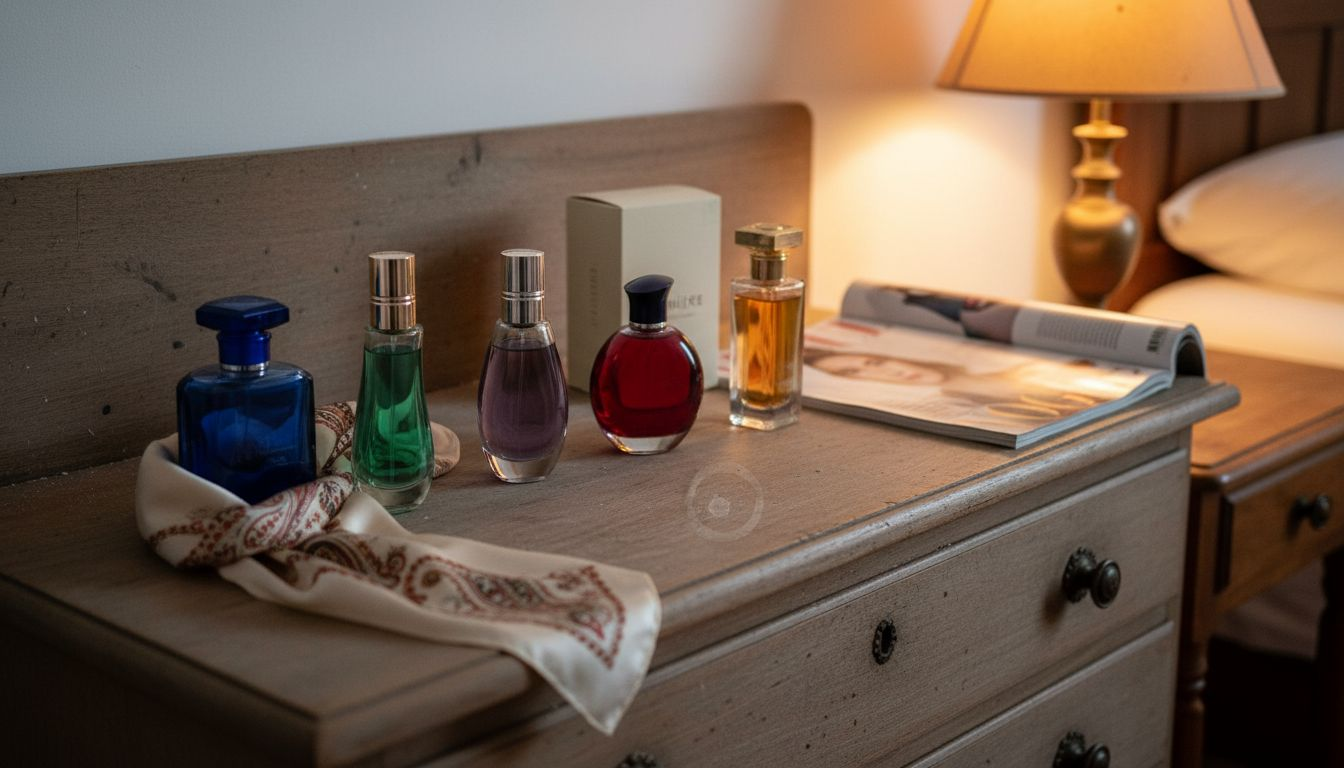
The main scent families
Fragrance classification systems organize scents into families based on their olfactory profiles and how they make you feel. Here are the core categories you’ll encounter:
- Floral: The largest family. Rose, jasmine, peony, and gardenia dominate. Romantic, feminine, versatile for work and evening.
- Woody: Sandalwood, cedar, vetiver, oud. Grounding and sophisticated. Often unisex. Perfect for professionals seeking depth.
- Citrus: Bright, fresh lemon, orange, bergamot notes. Morning-friendly. Clean and energizing. Best for warm weather.
- Oriental: Amber, vanilla, musk, spices. Rich and sensual. Evening wear. Creates a signature scent experience.
- Gourmand: Vanilla, caramel, chocolate, coconut. Sweet and comforting. Works year-round. Great for cozy vibes.
- Fresh: Clean, aquatic, herbal. Crisp and modern. Daily wear. Minimal and understated.
Knowing your preferred scent family saves time and money—you buy fragrances you’ll actually love, not impulse purchases.
How to identify your scent profile
Your scent profile depends on three factors: what you naturally gravitate toward, when you wear fragrance, and the impression you want to make.
Start by thinking about your everyday choices:
- What candles or body products do you use? This hints at your natural preference.
- What season makes you happiest? Citrus lovers thrive in summer; woody lovers embrace fall.
- How do you want to feel in a fragrance? Energized? Confident? Mysterious? Comfortable?
- What’s your lifestyle? Office-bound? Constantly on the go? Social events every weekend?
Many people love multiple families. You might wear citrus daily but prefer oriental for evening dates. That’s completely normal.
Most people discover their signature scent by testing across 3-4 families before settling on favorites.
Building a fragrance wardrobe
You don’t need one “perfect” perfume. Strategic variety matches your life:
- Daily: Fresh or light floral for understated elegance
- Work events: Woody or classic floral for professionalism
- Weekends: Gourmand or oriental for personal expression
- Evening: Oriental or spicy woody for confidence
Pro tip:Start with one fragrance from your preferred family, wear it for a week minimum, then test a second family—your skin chemistry and mood context dramatically influence how you perceive scents.
How cruelty-free and vegan formulas work
Cruelty-free and vegan perfumes aren’t compromises—they’re intentional formulation choices that deliver the same quality as conventional fragrances. Understanding how they work helps you make informed decisions aligned with your values.
The difference lies in ingredient sourcing and production methods, not performance.
What cruelty-free actually means
Cruelty-free means no animal testing at any stage of development. The brand, supplier, parent company, and ingredient manufacturers all skip animal testing. It’s a certification, not a marketing claim.
This doesn’t mean vegan—cruelty-free fragrances can still contain honey, beeswax, or animal-derived musks. The key distinction is testing methodology.
Look for these certifications:
- PETA-certified: Comprehensive cruelty-free standards
- Leaping Bunny: International gold standard for cruelty-free cosmetics
- Choose Cruelty-Free: Australian certification with strict audit requirements
- Brand transparency: Some companies publish their cruelty-free commitments directly
Cruelty-free doesn’t require sacrificing fragrance quality—many luxury brands use alternative testing methods and still achieve exceptional results.
How vegan formulas differ
Vegan perfumes contain zero animal-derived ingredients. That means replacing traditional components with plant-based or synthetic alternatives:
- Musks: Synthetic musks replace animal-derived versions (civet, ambergris, castoreum)
- Ambroxan: Lab-created substitute for ambergris; identical scent molecule
- Plant absolutes: Jasmine, rose, and vanilla extracts replace animal sources
- Beeswax alternatives: Synthetic waxes or plant-based waxes in formulations
Modern synthetic alternatives perform identically to animal-derived ingredients. The fragrance concentration, longevity, and scent profile remain unchanged.
Why the formulation shift matters
Swapping ingredients requires extensive testing—not on animals, but through sensory analysis, stability testing, and shelf-life evaluation. Scientists use human sensory panels, gas chromatography, and consumer trials instead.
Cruelty-free perfume advantages extend beyond ethics. You get transparency about what’s actually in your fragrance, cleaner ingredient lists, and peace of mind about your purchase impact.
Formulation stability improves because synthetic ingredients are more consistent than natural animal-derived sources. Batch-to-batch variation decreases, meaning your fragrance performs reliably.
Vegan and cruelty-free formulas use identical concentration levels and scent chemistry as conventional perfumes—performance is identical, not reduced.
Checking labels for authenticity
Not all claims are certified. Here’s how to verify:
- Look for certification logos on packaging or the brand website
- Check ingredient lists for animal-derived components
- Visit brand websites for specific cruelty-free commitments
- Verify certifier credentials through official certification bodies
- Read third-party reviews from ethical beauty platforms
If a brand lacks certification but claims cruelty-free status, request documentation. Legitimate brands provide transparent sourcing details.
Pro tip:Cruelty-free and vegan certifications take time and cost money—brands that pursue them genuinely commit to these values, so certified options typically reflect authentic ethical practices.
Clean ingredients and formulation standards
Clean ingredients mean transparency and safety—knowing exactly what’s in your perfume and why it’s there. Formulation standards ensure every bottle meets rigorous safety and quality benchmarks before reaching your skin.
This isn’t marketing hype. Global regulatory bodies enforce these standards through science-backed testing and documentation.
What makes ingredients “clean”
Clean ingredients prioritize purity, safety, and transparency. They’re sourced responsibly and chosen for efficacy, not just cost.
Clean formulations typically exclude:
- Phthalates: Chemicals that enhance fragrance longevity but carry health concerns
- Synthetic musks: Some accumulate in body tissue; clean formulas use safer alternatives
- Heavy metals: Impurities from poor sourcing or processing
- Parabens: Controversial preservatives many consumers prefer to avoid
- Allergens: Properly disclosed when used
IFRA fragrance safety standards set global limits on ingredient concentrations and establish restrictions based on scientific risk assessments. These standards protect consumers while supporting innovation in fragrance chemistry.
Clean ingredients align with eco-conscious values without sacrificing scent quality or longevity—modern formulation proves both are achievable.
Understanding regulatory frameworks
Regulatory safety frameworks govern fragrance safety worldwide. They address ingredient purity, concentration limits, and potential health risks like sensitization and allergies.
Key regulatory bodies include:
- European Union: Strictest regulations; bans 1,300+ substances
- United States FDA: Regulates cosmetics through ingredient disclosure requirements
- IFRA Standards: Industry-led global safety framework
- ISO International Standards: Ensure ingredient quality and consistency
These frameworks mandate rigorous safety data evaluation before ingredients enter fragrances. Manufacturers must prove ingredients are safe at specified concentrations.
Quality formulations invest in testing beyond minimum requirements. They conduct stability testing, shelf-life evaluation, and consumer safety assessments.
Decoding ingredient lists
Your fragrance ingredients appear on packaging or online. Here’s how to read them:
- Alcohol concentration: Listed first; typically 70-95% in eau de parfum
- Fragrance compounds: Usually listed as “fragrance” or “parfum” (proprietary blend)
- Additional compounds: Stabilizers, antioxidants, or natural extracts
- Allergen disclosures: Bold listing of known sensitizers
IFRA requires ingredient transparency while protecting proprietary formulas. You’ll see “fragrance” rather than 100+ individual scent molecules—that’s intentional protection of trade secrets.
Legitimate brands publish complete ingredient transparency reports or allergen information sheets. Request these if labels lack detail.
Pro tip:Check websites for detailed ingredient lists and safety certifications—brands confident in formulation quality display this information prominently rather than burying it.
Price, value, and ethical advantages compared
Designer-inspired perfumes cost 60-80% less than luxury brands while delivering comparable longevity and scent quality. Understanding where that savings comes from helps you make confident purchasing decisions that align with your values.
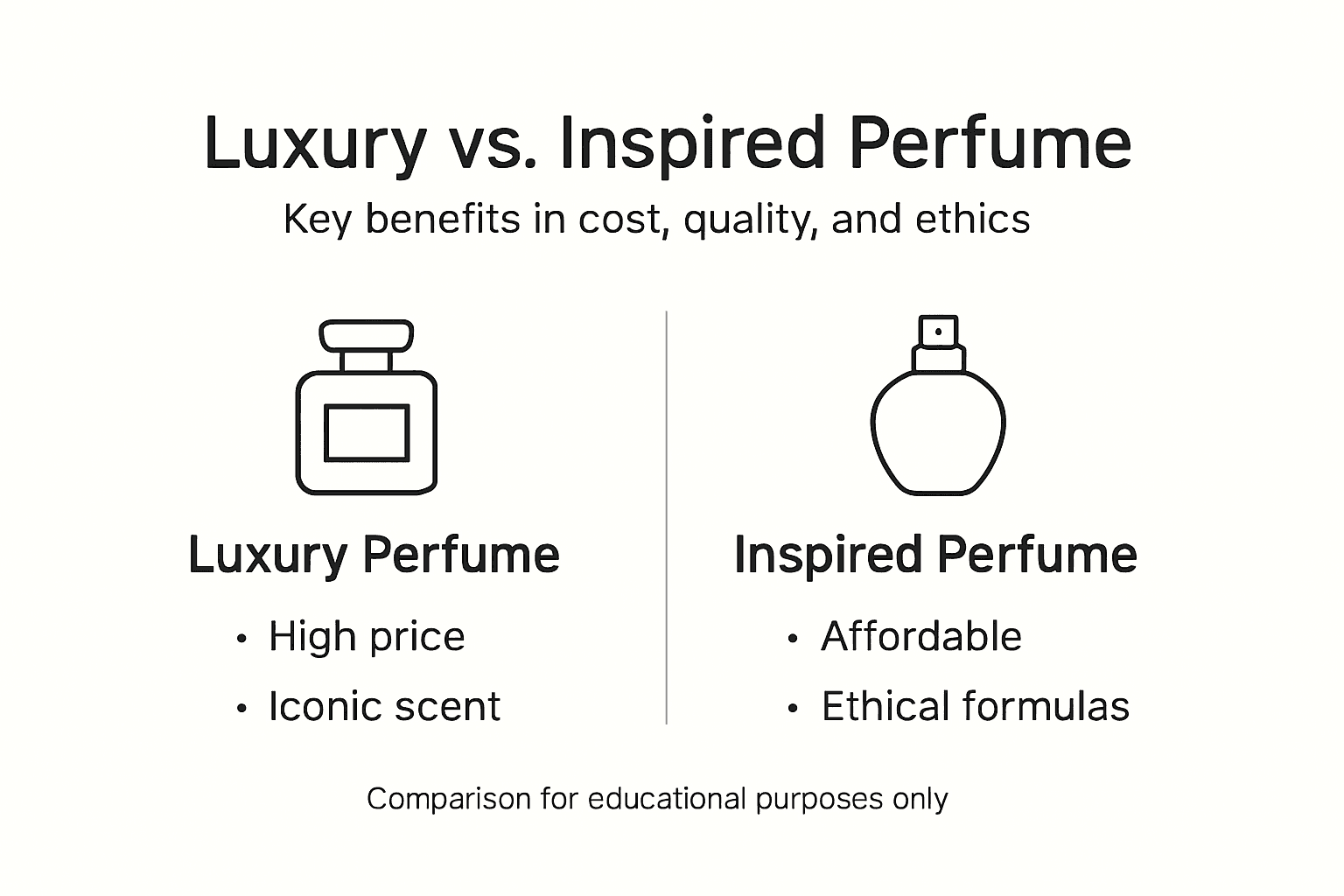
It’s not about cutting corners. It’s about eliminating unnecessary markups.
Breaking down the price difference
A $300 luxury fragrance and a $50 designer-inspired version may contain nearly identical fragrance concentrations and ingredient quality. The difference lies in overhead, not formulation.
Luxury brand costs include:
- Marketing budgets: 40-50% of retail price funds advertising and celebrity endorsements
- Retail markup: Department stores add 100-200% markup on wholesale price
- Packaging prestige: Designer bottles and cases add $30-60 per unit
- Brand heritage: You pay for history, not just juice
- Limited distribution: Exclusivity artificially inflates value perception
Designer-inspired perfumes skip unnecessary expenses. Direct online sales eliminate retail markups. Modest packaging reduces costs. Focus stays on fragrance quality, not brand mythology.
Inspired perfumes deliver luxury scent experiences at a fraction of designer prices by capturing essence without exclusive prestige costs.
Value per dollar comparison
Luxury designer fragrance:
- Cost: $200-350 per bottle
- Longevity: 6-8 hours average
- Ingredient transparency: Limited disclosure
- Cost per wear: $3-5 (estimated 50+ wears per bottle)
Designer-inspired perfume:
- Cost: $40-80 per bottle
- Longevity: 6-8 hours average
- Ingredient transparency: Full disclosure standard
- Cost per wear: $0.50-1.00 (estimated 50+ wears per bottle)
You’re not paying for inferior quality. You’re avoiding marketing taxes and retail middlemen.
Here is a side-by-side comparison of luxury and designer-inspired perfumes, highlighting key differences and what they mean for consumers:
| Category | Luxury Perfumes | Designer-Inspired Perfumes |
|---|---|---|
| Average Price | $200–$350 per bottle | $40–$80 per bottle |
| Ingredient Transparency | Limited disclosure | Full list typically available |
| Brand Markup | High due to prestige and marketing | Minimal, direct-to-consumer savings |
| Ethical Certification | Occasionally, often selective | Frequently standard, widely publicized |
| Packaging | Elaborate, decorative | Simple, cost-conscious |
| Value Per Wear | $3–$5 per use | $0.50–$1 per use |
| Focus | Heritage and exclusivity | Quality and accessibility |
Ethical advantages matter
Niche and inspired fragrances emphasize sustainability and cruelty-free practices more frequently than mass-market luxury brands. Many designer-inspired options prioritize transparency about ingredient sourcing and manufacturing impact.
Ethical benefits you gain:
- Direct pricing supports smaller companies focused on values, not shareholder returns
- Cleaner ingredients without pressure to use cheap synthetics for profit margins
- Cruelty-free commitments integral to brand identity, not afterthought compliance
- Sustainable packaging as standard practice, not premium option
- Transparent sourcing about where ingredients actually come from
Luxury brands market “ethical” collections at premium prices. Designer-inspired brands integrate these values into baseline products.
Better value means better ethics—supporting companies aligned with your values while keeping more money in your pocket.
Making the smart choice
Price doesn’t determine quality in perfumery. Formulation expertise, ingredient sourcing, and quality control determine longevity and scent satisfaction.
Consider these factors:
- Test before committing to expensive bottles
- Compare fragrance concentrations (40-50% indicates premium quality)
- Check ingredient lists and certifications
- Read reviews from verified purchasers
- Calculate cost-per-wear across projected usage
Many NYC professionals own 3-4 designer-inspired fragrances instead of one luxury bottle. Variety at better prices beats exclusivity at inflated costs.
Pro tip:Save your first perfume purchase as a test—buy one designer-inspired fragrance from your preferred scent family, wear it for two weeks minimum, then decide if you want to invest in a full wardrobe or explore other families.
Discover Luxury-Inspired Scents Without Sacrificing Quality or Ethics
Many fragrance lovers face the challenge of wanting long-lasting, cruelty-free, and premium perfumes that deliver luxury quality without the inflated price. This article highlights the common myths around designer-inspired perfumes and shows how you can enjoy sophisticated scent families like floral, woody, and gourmand, without compromise. If you have ever felt hesitant due to brand markups, unclear ingredients, or concerns about cruelty-free formulations, now is the perfect time to explore alternatives designed specifically to meet your values and lifestyle.
Experience true parfum excellence with confident transparency and affordability. Our carefully curated Fragrances collection brings you expertly crafted extrait de parfum inspired by iconic luxury scents. Each fragrance offers high concentration, clean ingredients, and a cruelty-free promise that aligns with your ethical standards. You can even refine your choices with our scent finder quiz and explore popular options in the Bestsellter Display.
Challenge the notion that quality means costly. Choose designer-inspired perfumes that prioritize premium formulation and sustainability without boutique markups. Visit Parfum.NYC today to find your signature scent that honors your budget and values. Shop now for free shipping and a 30-day satisfaction return policy that makes your fragrance journey risk-free.
Frequently Asked Questions
What are designer-inspired perfumes?
Designer-inspired perfumes are fragrances that draw inspiration from luxury scents, providing similar quality and longevity at a lower price without copying the exact formulas.
How do designer-inspired perfumes compare in longevity to luxury fragrances?
Quality designer-inspired perfumes often feature high concentrations of fragrance oils that can last 6-8 hours or more, similar to luxury fragrances.
Are designer-inspired perfumes made with inferior ingredients?
No, many designer-inspired perfumes use the same premium ingredients sourced from reputable suppliers as luxury brands, focusing on quality rather than brand prestige.
What does “cruelty-free” mean in the context of fragrances?
Cruelty-free means that the perfume has not been tested on animals at any stage of development. This includes all aspects of production, from ingredient sourcing to final formulation.


