


Finding a true extrait de parfum can feel tricky in a marketplace where labels are often misleading and marketing buzzwords cloud the air. For eco-conscious Americans passionate about fragrance, making sense of ingredients and concentration levels is essential—not just for personal style, but for ethical living. This guide clears up common myths, explains what makes a real extrait de parfum, and shows how to choose affordable luxury that is truly cruelty-free and vegan.
Table of Contents
- Defining Extrait De Parfum And Common Myths
- Concentration Levels And Scent Families Explained
- Key Ingredients: Clean, Cruelty-Free Formulations
- Longevity, Application, And Wearer Experience
- Comparing Extrait De Parfum With Other Fragrance Types
Key Takeaways
| Point | Details |
|---|---|
| Extrait de Parfum Definition | Extrait de parfum is the most concentrated fragrance type, containing 20–40% fragrance oils, ensuring a long-lasting and intense scent experience. |
| Misleading Labeling | Be cautious of terms like “Elixir de Parfum”; they may not adhere to fragrance concentration standards, potentially leading to overpaying for lower quality. |
| Application and Longevity | Proper application techniques enhance the scent’s longevity and projection, allowing for a personalized and luxurious experience. |
| Sustainability Benefits | Choosing extrait de parfum can reduce environmental impact due to fewer applications needed, promoting a more sustainable approach to fragrance use. |
Defining extrait de parfum and common myths
Extrait de parfum sits at the top of the fragrance concentration hierarchy. It’s the most concentrated form you can buy, containing 20–30% fragrance oil suspended in an alcohol base. Think of it as the purest expression of a scent—nothing diluted, nothing watered down.
But here’s where confusion starts. The fragrance industry has loose labeling standards, especially in the inspired perfume market. Some brands throw around terms like “Elixir de Parfum” or “Pure Perfume” without following any official guidelines. That’s why understanding the real definition matters for your wallet and your expectations.
What extrait de parfum actually is
Real extrait de parfum delivers intensity you notice immediately. You apply it, and the scent projects powerfully from your skin. The high concentration means you need less product per application, making each bottle last significantly longer than lighter fragrances.
Here’s what separates legitimate extrait de parfum from imposters:
- Higher fragrance concentration: 20–30% (some sources cite up to 40%) fragrance oils in alcohol
- Alcohol-based formulation: Uses proper alcohol as a carrier, not oils or other bases
- Richer composition: Denser scent profile with fuller, more complex layers
- Longer wear time: Lasts 8+ hours on skin, sometimes extending into the next day
Common myths that mislead buyers
Myth #1: Any strong-smelling fragrance is extrait de parfum. Wrong. Strength and concentration are different things. You can have a potent eau de toilette that smells powerful but won’t last as long.
Myth #2: The label is always accurate. Not true. The inspired perfume market often misuses professional fragrance terminology for marketing appeal. Brands sometimes label products as “extrait” when they contain far less fragrance oil.
Myth #3: Extrait de parfum is only for special occasions. This misconception keeps people from enjoying luxury fragrances daily. Since it lasts longer, you actually use less product over time.
Myth #4: All concentrations feel the same on your body. False. The fragrance concentration directly affects projection, longevity, and how the scent develops on your skin throughout the day.
Real extrait de parfum is defined by its concentration level and alcohol-based formulation—not by marketing claims or brand positioning.
Pro tip: When shopping for extrait de parfum, verify the fragrance concentration percentage on the product label and confirm it contains alcohol as the base. Avoid products that simply claim to be “pure perfume” without listing actual concentration levels.
Concentration levels and scent families explained
Concentration and fragrance family are two completely different things, yet both shape your experience with a perfume. Concentration determines how long the scent lasts and how intensely it projects. Fragrance family determines what the scent smells like—whether it’s fresh and citrusy, warm and exotic, or something else entirely.
Think of concentration as the volume, and fragrance family as the song.
Understanding concentration levels
Fragrance concentration directly impacts both longevity and intensity. The higher the concentration, the longer your scent sticks around and the more noticeable it becomes throughout the day.
Concentration ranges from light to heavy:
- Eau Fraîche: 1–3% fragrance oils, lasts 1–2 hours
- Eau de Cologne: 3–5% fragrance oils, lasts 2–3 hours
- Eau de Toilette: 5–15% fragrance oils, lasts 4–6 hours
- Eau de Parfum: 15–20% fragrance oils, lasts 6–8 hours
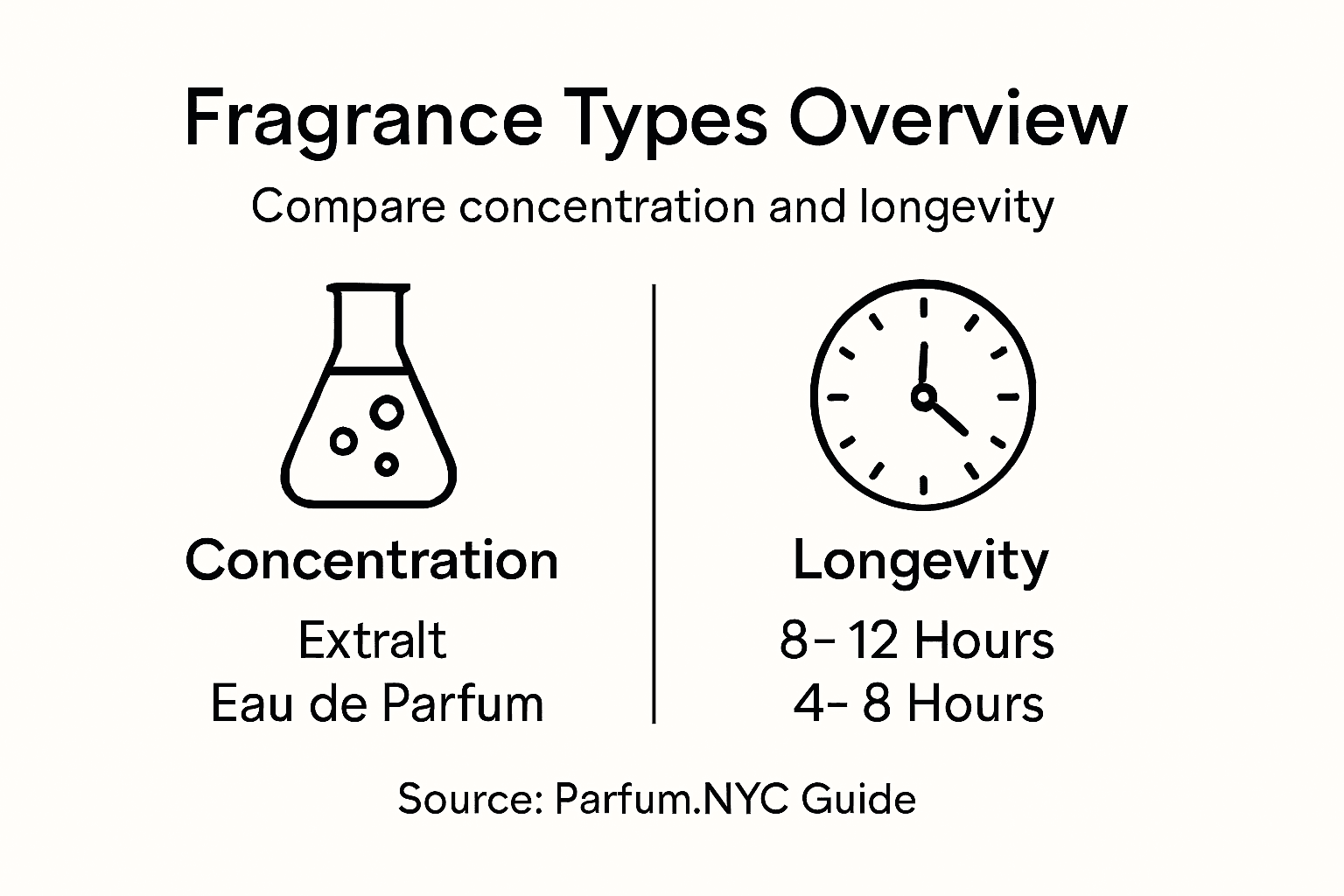
- Extrait de Parfum: 20–40% fragrance oils, lasts 8+ hours
With extrait de parfum, you need only a few spritzes. A single application covers your entire day without reapplication.
Here’s a quick comparison of fragrance concentration types for easy reference:
| Type | Fragrance Oil (%) | Typical Longevity | Occasion Fit |
|---|---|---|---|
| Eau Fraîche | 1–3 | 1–2 hours | Quick refresh, workouts |
| Eau de Cologne | 3–5 | 2–3 hours | Casual, daytime |
| Eau de Toilette | 5–15 | 4–6 hours | Everyday, office |
| Eau de Parfum | 15–20 | 6–8 hours | Work, dinner, date |
| Extrait de Parfum | 20–40 | 8+ hours | Luxury, special events |
Fragrance families and what they mean
Fragrance families classify perfumes by their dominant scent profile. Understanding families helps you find scents that actually match your personal style.
Here are the main families:
- Fresh: Clean, light, and energizing—citrus, ocean breeze, green notes
- Floral: Romantic and feminine—rose, jasmine, peony, or blends of multiple flowers
- Oriental: Warm, sensual, and exotic—amber, vanilla, musk, spices
- Woody: Natural and grounding—sandalwood, cedar, vetiver, oud
Each family contains subtypes and characteristic notes. A fresh fragrance might emphasize citrus one day and aquatic notes the next. The structure of perfumes into top, middle, and base notes affects how each family develops on your skin over time.
Why both matter together
Concentration and family work together. A floral extrait de parfum hits differently than a floral eau de toilette. The same rose scent at high concentration feels luxurious and layered; at low concentration, it’s light and breezy.
Your choice depends on context. For daily wear in an office, a fresh eau de parfum keeps things professional. For evening events, an oriental extrait de parfum delivers the drama and staying power.
Fragrance family defines the character; concentration defines the experience.
Pro tip: Start by identifying your preferred fragrance family, then choose your concentration based on occasion and wear duration. A versatile rotation includes at least one fresh and one woody fragrance at different concentration levels for maximum flexibility.
Key ingredients: Clean, cruelty-free formulations
Clean beauty in fragrance means something specific: no animal testing, no animal-derived ingredients, and production methods that respect both people and the planet. Extrait de parfum can absolutely deliver this. The key is understanding what goes into your bottle and where it comes from.
Your skin absorbs fragrance compounds directly. That’s why the ingredient list matters more than most people realize.
What makes a fragrance truly clean
A clean fragrance avoids synthetic chemicals linked to skin sensitivity, hormone disruption, or environmental harm. This doesn’t mean synthetic ingredients are automatically bad—it means choosing synthetics made responsibly.
Clean formulations prioritize:
- Sustainable sourcing: Ingredients harvested without depleting ecosystems
- Ethical production: No animal testing or animal-derived ingredients
- Transparency: Brands clearly list what’s in the bottle
- Minimal harmful additives: No phthalates, parabens, or heavy metals
- Recyclable packaging: Glass bottles and minimal plastic waste
Biotechnology and sustainable fragrance ingredients
Modern perfumery uses biotechnological synthesis to create sustainable fragrance ingredients that replace traditional components. These lab-created alternatives mimic natural scents without harvesting rare plants or harming ecosystems.
Biotech ingredients offer real advantages. A lab-synthesized rose molecule performs identically to natural rose oil but requires no flower cultivation. Enzymatic processes improve natural extracts, reducing waste and environmental impact.
For eco-conscious shoppers, this means luxury fragrances without guilt.
Cruelty-free means more than you think
Cruelty-free covers multiple dimensions. No animal testing during development. No lanolin, musk, or ambergris in the formula. No ingredient suppliers using exploitative labor practices.
Vegan extrait de parfum takes it further by eliminating all animal byproducts entirely. This includes honey, beeswax, or insect-derived colorants.
When shopping, look for certifications from organizations that verify these claims independently.
Why this matters for extrait de parfum
Extrait de parfum’s high concentration means you apply less product overall. Fewer applications equal smaller environmental footprint. A single bottle lasts months, reducing packaging waste compared to lighter formulations.
Choosing a clean, cruelty-free extrait de parfum multiplies your positive impact.
See how extrait de parfum and clean beauty intersect for conscious consumers:
| Factor | Clean Formulation Example | Extrait de Parfum Advantage |
|---|---|---|
| Ingredient sourcing | Ethically harvested botanicals | Fewer uses mean less total sourcing |
| Animal testing | None permitted | Most premium extraits meet this |
| Packaging | Recyclable materials | Less plastic due to longer lifespan |
| Cost per wear | Moderate, varies by brand | Lower over time, high concentration |
High concentration + clean ingredients = luxury with genuine ethics.
Pro tip: Check product certifications (like Leaping Bunny or Vegan Society) and request ingredient transparency from brands before purchasing. A quality extrait de parfum should clearly state its composition and sourcing practices without vague language.
Longevity, application, and wearer experience
Extrait de parfum delivers a completely different experience than lighter fragrances. You’re not just getting a scent that lasts longer—you’re getting a multi-dimensional olfactory journey that unfolds throughout your day. Understanding how to maximize this experience transforms how you wear fragrance.
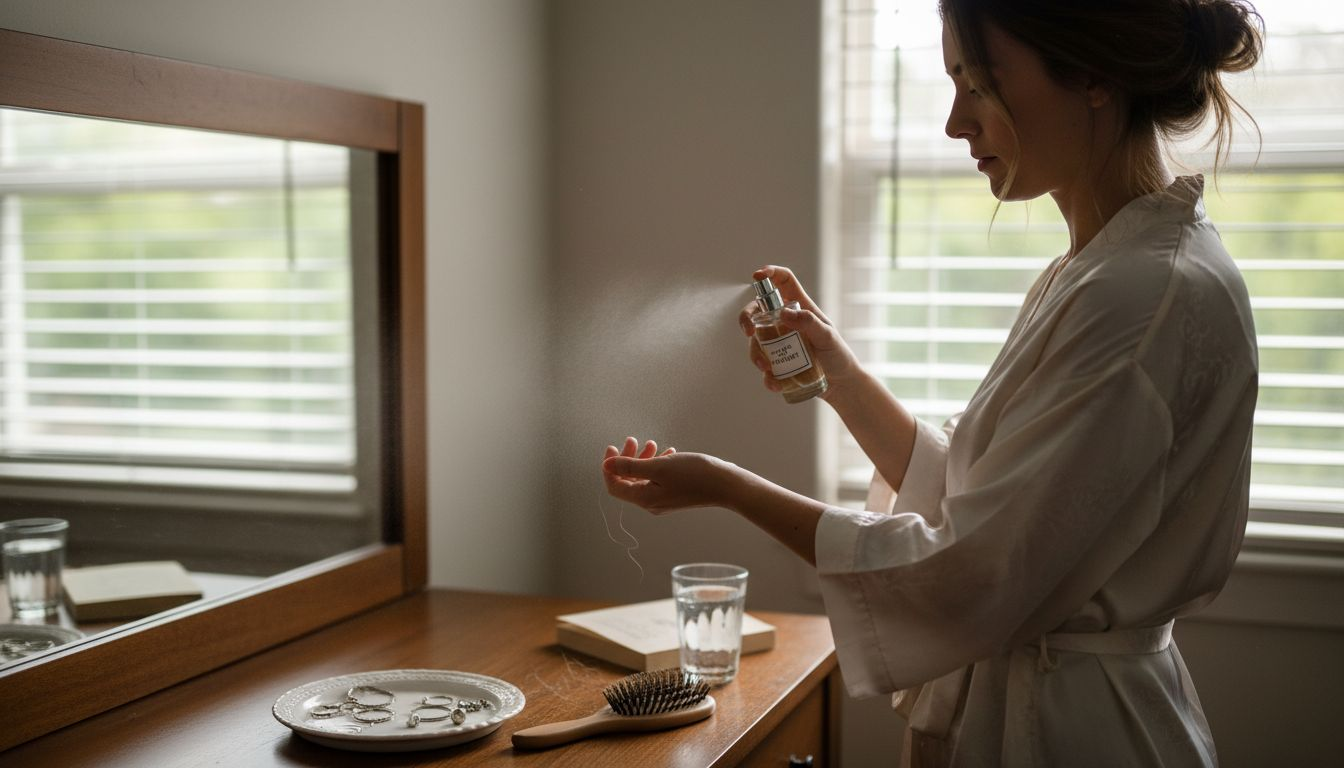
The magic lies in three things: formulation, application, and your individual skin chemistry.
How extrait de parfum lasts so long
Longevity comes down to chemistry. Perfume longevity depends on ingredient selection, fixatives, and formulation techniques that trap fragrance molecules on your skin longer. Extrait de parfum uses high concentrations of aroma compounds combined with powerful fixatives like resins and musks.
These fixatives act like anchors. They hold volatile fragrance molecules in place, preventing them from evaporating quickly. A properly formulated extrait de parfum creates layered scent that shifts as the day progresses.
You apply a few spritzes in the morning. Eight hours later, the base notes are still there.
Application matters more than most people realize
How you apply extrait de parfum directly impacts wear time and projection. The right technique maximizes longevity while avoiding the “too much” feeling that discourages daily wear.
Best practices for application:
- Pulse points: Apply to wrists, behind ears, inner elbows—areas where skin warmth amplifies the scent
- Don’t rub: Rubbing your wrists together breaks fragrance molecules; just let it dry naturally
- Spray or dab: A light mist covers more area than dabbing, but both work effectively
- Less is more: One or two spritzes of extrait de parfum is equivalent to five spritzes of eau de toilette
- Layer strategically: Apply to skin, not clothing, for optimal longevity
Proper application techniques for perfume directly influence how long your fragrance lasts and how others perceive it.
Skin chemistry shapes your experience
Your skin’s pH, natural oils, and hydration level alter how fragrance behaves on you. Two people wearing the same extrait de parfum experience noticeably different scents based on individual chemistry.
Factor in humidity, body temperature, and even diet. These variables affect fragrance projection and longevity. What lasts twelve hours on your skin might last eight hours on someone else’s.
This is why fragrance is truly personal. Your extrait de parfum becomes uniquely yours.
Why this creates a better wearer experience
Extrait de parfum’s longevity means you wear something you genuinely love for hours. No mid-day reapplication needed. No worrying whether people can smell you. Just confidence that your chosen scent is there, developing beautifully on your skin.
You get the sensory pleasure of fragrance evolution. Top notes fade. Heart notes emerge. Base notes settle in. It’s an experience, not just a smell.
High concentration + proper application + skin chemistry = personalized luxury that lasts all day.
Pro tip: Apply extrait de parfum to clean, hydrated skin immediately after showering when skin temperature is elevated and pores are open. This maximizes fixative absorption and extends longevity by hours.
Comparing extrait de parfum with other fragrance types
Fragrance concentration creates a hierarchy of options, each serving different purposes and budgets. Extrait de parfum sits at the top, but that doesn’t mean it’s always the right choice. Understanding how it compares to lighter alternatives helps you make informed decisions based on your lifestyle and values.
The real question: are you paying for luxury, longevity, or both?
The concentration spectrum
Fragrance types differ primarily in concentration percentage and the cost per wearing. Lower concentrations cost less upfront but require more frequent application. Higher concentrations cost more initially but deliver better value over time.
Here’s how they stack up:
- Eau Fraîche (1–3%): Lightest option, lasts 1–2 hours, best for layering
- Eau de Cologne (3–5%): Fresh and sporty, lasts 2–3 hours, good for daytime
- Eau de Toilette (5–15%): Most popular option, lasts 4–6 hours, versatile for daily wear
- Eau de Parfum (15–20%): Strong concentration, lasts 6–8 hours, luxury feel
- Extrait de Parfum (20–40%): Highest concentration, lasts 8+ hours, most expensive but longest-wearing
Price versus longevity reality
Extrait de parfum costs significantly more per bottle, but the math changes when you calculate cost per wear. A $150 eau de toilette bottle lasts two months. A $250 extrait de parfum bottle lasts six months.
You’re applying one spritz of extrait versus five spritzes of eau de toilette. Over a year, the extrait becomes more economical. Plus, you experience superior scent quality without worrying about mid-day fading.
Why high-concentration fragrances last longer directly impacts your wearing experience and overall value.
When each type makes sense
Your lifestyle determines the best concentration for you. Office workers appreciate eau de parfum’s 6–8 hour performance without reapplication. Athletes or outdoor enthusiasts prefer lighter eau de toilette that won’t feel overwhelming in heat.
Special occasions justify extrait de parfum’s intensity. Evening events, date nights, or important presentations deserve the full sensory experience. The scent projects beautifully, lasts until bedtime, and communicates genuine care.
Daily luxury seekers invest in extrait de parfum because they value fragrance as part of personal grooming and sensory pleasure.
The sustainability angle
High concentration matters environmentally. Using less product per application reduces packaging waste. A single extrait de parfum bottle replaces three or four bottles of lighter fragrances. For eco-conscious consumers, this concentration advantage aligns with sustainable choices.
Choosing quality over quantity reflects values beyond just fragrance preference.
Extrait de parfum offers superior longevity, better value over time, and genuine luxury—but only if you prioritize depth and lasting power.
Pro tip: Start with an eau de parfum to understand your scent preferences, then invest in an extrait de parfum in a fragrance family you genuinely love. This approach balances budget with the luxury experience.
Discover Luxury and Clean Beauty with Extrait de Parfum from Parfum.NYC
Finding a truly high-quality extrait de parfum that combines longevity, intense fragrance concentration, and clean, cruelty-free ingredients can be challenging. Many fragrances claim to offer luxury but fall short on transparency and ethical sourcing. At Parfum.NYC we understand your desire for premium formulations that last all day while respecting your values. Whether you prefer floral sophistication or woody warmth our curated collections provide expertly crafted scents with 20 to 40 percent fragrance oils that deliver the rich, multi-layered experience you deserve.
Explore our Floral and Fougere collections to find your signature extrait de parfum that blends clean beauty principles with enduring power. Take advantage of free shipping and a 30-day satisfaction guarantee for a worry-free experience. Visit Parfum.NYC today to elevate your fragrance journey with cruelty-free luxury designed for real life.
Frequently Asked Questions
What is extrait de parfum?
Extrait de parfum is the most concentrated type of fragrance, containing 20-30% fragrance oils suspended in an alcohol base. It delivers an intense scent that lasts longer than lighter fragrances.
How does extrait de parfum differ from other fragrance types?
Extrait de parfum has a higher concentration of fragrance oils compared to other types like eau de toilette and eau de parfum, resulting in longer longevity and a richer scent profile. While eau de toilette typically contains 5-15% oils, extrait de parfum can contain up to 40%, allowing it to last 8 hours or more.
How should I apply extrait de parfum for the best results?
For optimal results, apply extrait de parfum to pulse points such as wrists and behind the ears. It’s best to spray lightly and allow it to dry naturally instead of rubbing it in, which can break fragrance molecules and diminish scent longevity.
Are there clean and cruelty-free options for extrait de parfum?
Yes, many extrait de parfum options prioritize clean formulations that avoid harmful additives and animal testing. Look for brands that highlight sustainable sourcing, ethical production, and ingredient transparency to ensure you’re choosing a responsible option.
Recommended
- Advantages of Extrait de Parfum – Why High-Concentration Fragrances Last Longer – PARFUM.NYC
- News – PARFUM.NYC
- Luxury-Inspired Fragrance: Signature Elements and Value – PARFUM.NYC
- How to Apply Perfume Correctly for Lasting Luxury Results – PARFUM.NYC
- Whipped Honeycomb Beef Tallow Body Butter – Moose’s Tallow
- C-TETRA Luxe


